



An attractive unit quote can become expensive after integration, qualification, and a late design change. For an OEM, the real cost of a ranging module is not only the number on the purchase order; it includes the work required to make the module repeatable in the intended enclosure, target environment, and production flow.
That is why two quotes that appear to describe the same function can differ sharply. The difference may sit in the transmitter and receiver architecture, the tolerance stack, the screening plan, the interface work, or simply in what was assumed but never written down.
A laser rangefinder module price is driven by the optical and electronic architecture, the required ranging conditions, qualification depth, volume, and change-control burden. A useful OEM comparison starts with a shared test condition and an RFQ that defines interfaces, environmental assumptions, acceptance criteria, and documentation—not a target range alone.
Laser Rangefinder Module Price: Start with the Real System
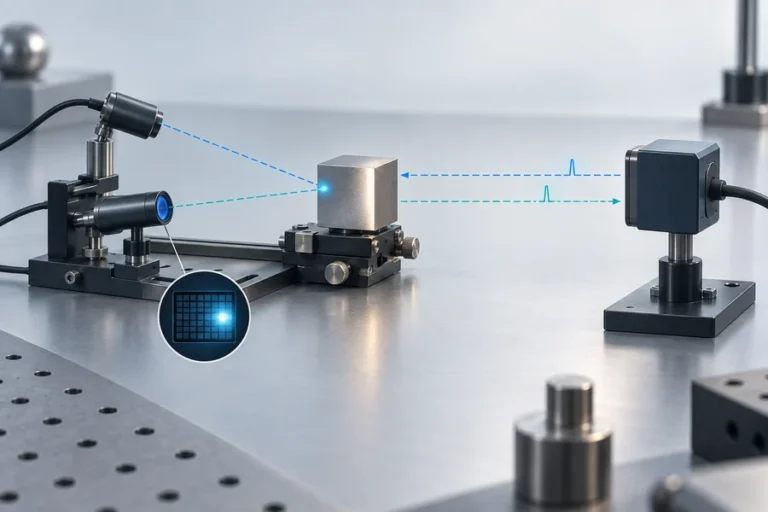
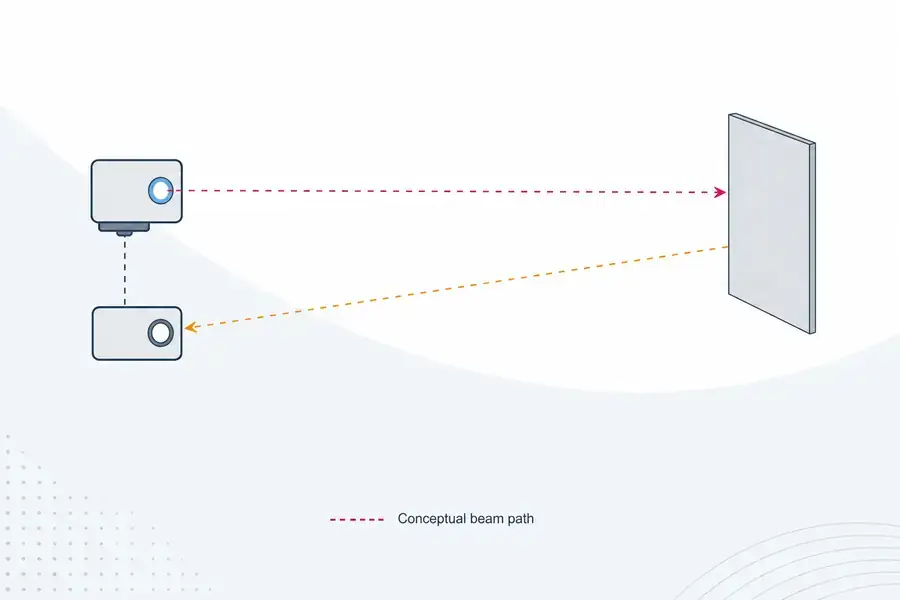
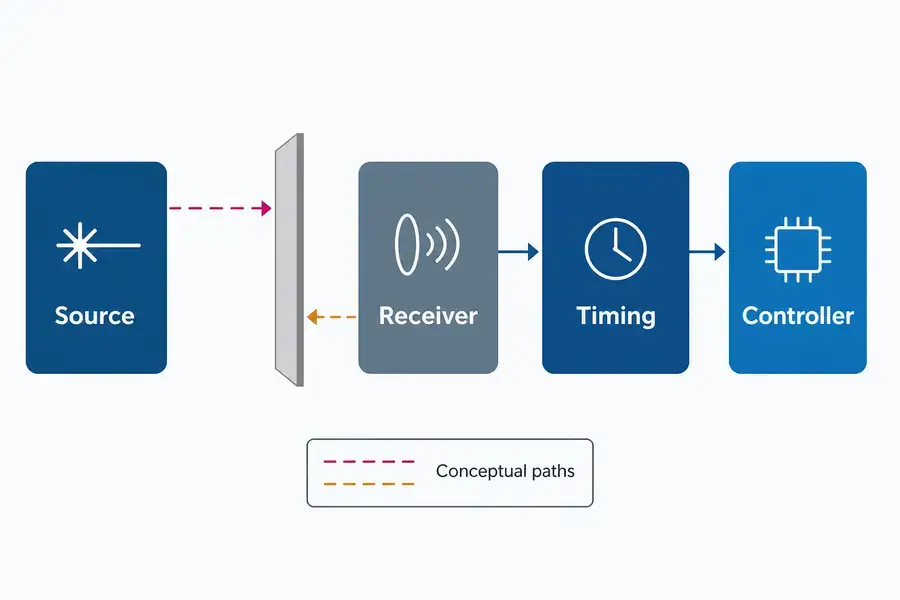
Laser rangefinders measure distance by sending light to a target and processing the returned signal. In a direct time-of-flight design, the measured distance is related to the return travel time; the usable result depends on much more than the transmitter. Receiver sensitivity, optical aperture, beam divergence, target reflectance, ambient light, alignment, and signal processing all affect the outcome. RP Photonics’ rangefinder overview is a helpful technical reference for these system interactions.
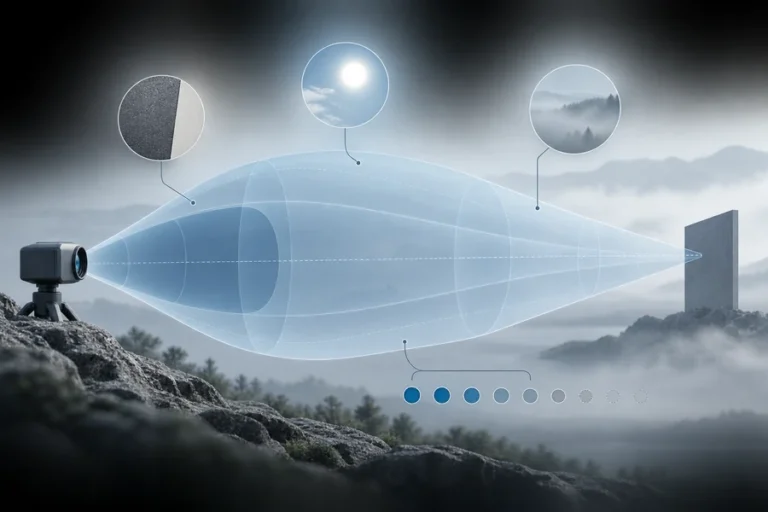
For purchasing, this means a claim such as “long range” is not a bill of materials. Ask what target, reflectance, atmosphere, aperture, divergence, update rate, and acceptance method were assumed. If those conditions differ between suppliers, the lower quote may describe a different engineering problem.
The same discipline applies to accuracy. A time value, a displayed distance value, and an end-system accuracy specification are not interchangeable. Integration mechanics, boresight stability, noise filtering, and calibration can all add work after the module arrives. Our technology approach begins with these interfaces because stable production performance is designed into the system rather than inferred from one demonstration.
The cost drivers that belong in every RFQ
Optical architecture and wavelength path
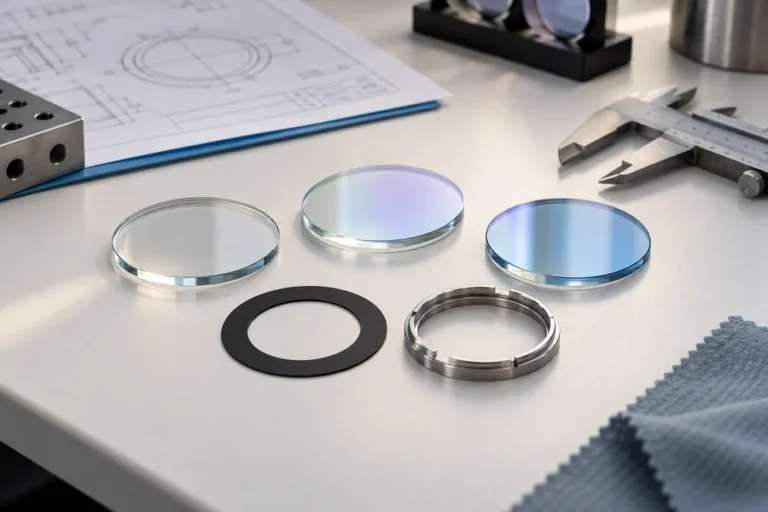
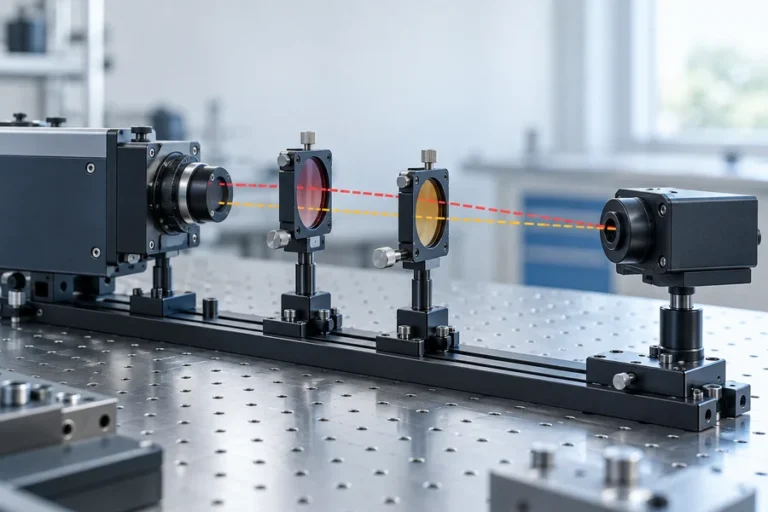
The source, detector, optics, filters, and alignment process form the core cost structure. A system’s wavelength choice affects the available source and detector technologies, coating choices, optical filtering, and safety assessment. It is not enough to compare wavelength labels by themselves, and wavelength alone does not establish a safety classification.
Beam divergence is another practical lever. A tighter far-field beam can improve energy placement on a target, but it can require more demanding optics, alignment, mechanical stability, and verification. A larger collection aperture may help a weak return, while also affecting envelope, mounting, and cost. Those choices should be evaluated against the real target and working environment rather than a generic maximum-range statement.
Ask the supplier to state the operating point for every key value: drive conditions, repetition rate where applicable, temperature, target type, and measurement method. This makes the laser rangefinder module price comparable instead of merely negotiable.
Electronics, firmware, and host integration
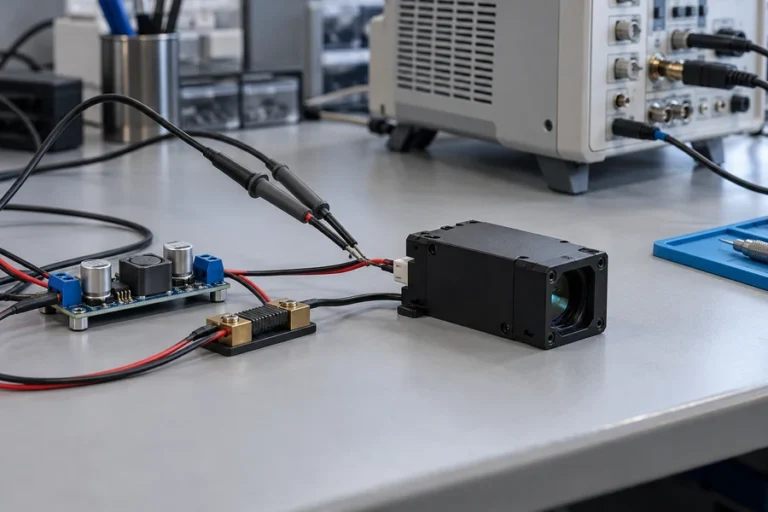
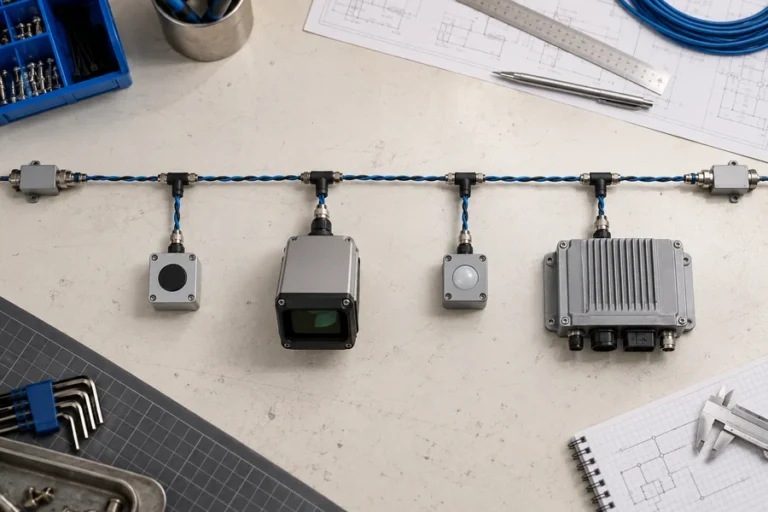
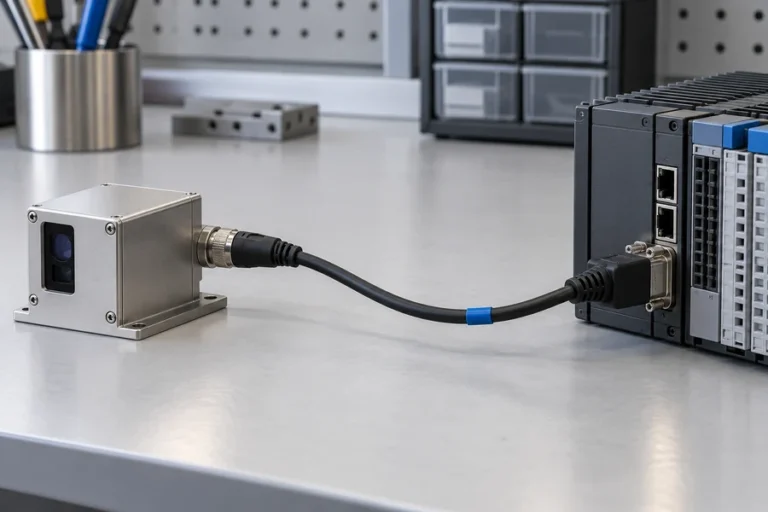
The interface is often where an apparently standard module becomes a custom program. Power-input tolerance, transient current handling, logic levels, connector choice, mounting reference, data framing, host timing, and fault handling all need an owner. A module that is inexpensive on a bench can require additional boards, shielding, firmware work, or test fixtures in the host product.
For example, a communication request should describe the physical interface, baud rate or timing expectation, command behavior, error reporting, and the production test method. It should also say whether the host requires raw measurements, filtered distance values, timestamps, or diagnostic status. Review the broader Lumexis solutions discussion with your system architecture in hand; that usually exposes costs that an isolated module specification misses.
Mechanical and environmental requirements
Mechanical integration has a cost even when no custom housing is requested. The module needs a defined mounting datum, heat path, optical-window relationship, cable routing, and access for adjustment or service. Tight envelope constraints can affect assembly sequence and test access.
Environmental requirements also need conditions, not adjectives. Specify the intended operating and storage temperatures, condensation or contamination exposure, vibration profile where relevant, and how functional checks will be performed before and after the relevant stress. A qualification request with no acceptance criteria can create uncertainty at both the sample and production stages.
Validation, calibration, and traceability
Screening and final verification are not overhead when the module is part of an OEM product. They are part of the delivered risk profile. At Lumexis, our production flow can include incoming inspection, chip test, assembly, fiber coupling and alignment, hermetic sealing, burn-in or aging screening, and final performance testing, selected to fit the product and program requirements.
That work has a cost, but it can reduce the far greater cost of unexplained field variation. Ask which checks are performed on every unit, which are sample-based, what records are retained, and what happens when a component or process changes. The services team can help turn those questions into an integration and validation plan.
Volume changes more than the unit price
At low volume, engineering preparation, fixtures, setup time, and a wider mix of components are spread across fewer units. At higher volume, stable designs can benefit from repeatable assembly, sourcing commitments, and better test throughput. That does not make a high-volume quote automatically lower risk: a supplier still needs to show how the process holds alignment, test coverage, and revision traceability as throughput grows.
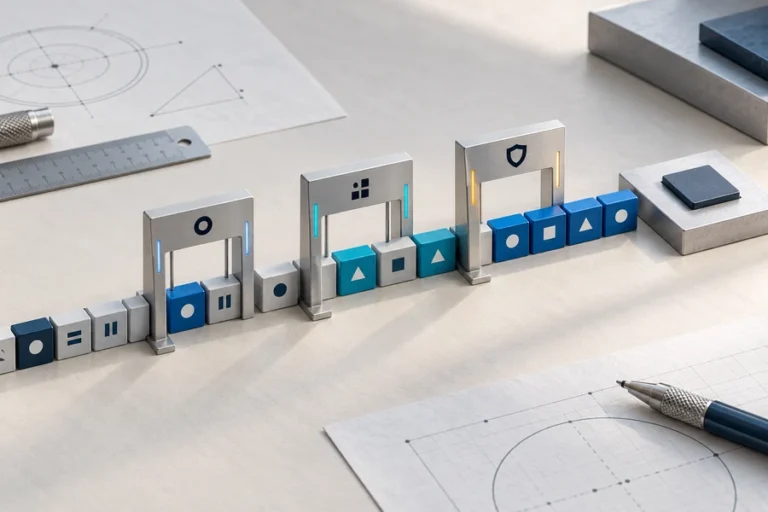
The most useful comparison asks for costs by program phase rather than demanding a single universal number. Separate evaluation samples, engineering changes, pilot production, and stable production. Then document the trigger that moves the program from one phase to the next. This also helps procurement distinguish a non-recurring engineering item from a recurring unit cost.
Variant control matters here. A narrowly defined set of interfaces, optical options, and firmware behaviors is easier to qualify and forecast than a growing list of informal exceptions. If a variant is necessary, define its unique part number, acceptance test, documentation set, and change-notification path.

A quote-comparison framework for OEM teams
Use the following questions to normalize competing proposals. They are deliberately practical: each one connects a price line to an engineering responsibility.
| RFQ area | What to define | Why it changes cost and risk |
|---|---|---|
| Ranging conditions | Target type, reflectance, distance band, ambient light, update rate | Establishes the optical and receiver problem being quoted |
| Interfaces | Power, connector, communication, timing, diagnostics | Prevents hidden host-board and firmware work |
| Mechanical integration | Envelope, datums, heat path, window, cable exit | Determines fixtures, tolerances, and installation effort |
| Verification | Acceptance tests, sample size, records, failure handling | Makes unit-to-unit consistency auditable |
| Supply control | Forecast, revision level, approved substitutions, change notice | Protects qualification work as volume increases |
Do not use the framework to force a supplier into a premature commitment. Use it to expose assumptions early enough to make an informed choice. A credible supplier should be able to explain which input is still unknown, which test would resolve it, and how a later change would affect cost or timing.
What we recommend before asking for a final price
Start with an engineering conversation, not a bare target range. Share the civil or industrial application, target behavior, envelope, electrical interface, expected operating conditions, and production outlook. Then ask for a quote that separates standard content from requested customization and identifies the proposed verification plan.
At Lumexis, we design and manufacture laser sources and rangefinder modules for measurement, sensing, industrial, and scientific systems. Our team can work through optical, optomechanical, electronics, firmware, thermal-management, and weak-signal-ranging questions together, so that the purchase decision reflects the complete integration task. See our laser rangefinder module portfolio when defining the starting point.
The result should be a clearer total-cost decision: less ambiguity in prototype work, fewer avoidable changes before production, and a supply plan that remains usable after the first build.
FAQ
Why do two laser rangefinder module quotes differ so much?
They may be based on different target conditions, optical paths, detector choices, interfaces, test coverage, or production volumes. Compare the assumed ranging conditions and acceptance criteria before comparing currency values. If those inputs are not written down, the quotations may not represent the same delivered function.
Does a longer claimed range always mean a higher price?
Not always, but it usually changes several engineering variables. The transmitter, receiver sensitivity, optics, beam control, signal processing, test conditions, and packaging may all matter. A maximum-distance claim without target and environmental conditions cannot reliably predict either price or production performance.
Can wavelength alone determine the cost of a rangefinder module?
No. Wavelength influences source, detector, optics, and filtering choices, but the full architecture and acceptance conditions determine the delivered cost. It also does not, by itself, establish a product’s safety classification; that assessment depends on the specific product and use conditions.
What should an OEM include in a rangefinder module RFQ?
Include target and distance conditions, optical-window assumptions, envelope and mounting data, power and communication requirements, required update behavior, environmental conditions, validation criteria, forecast volume, and change-control expectations. This gives suppliers a common basis for a technically comparable quote.
Is burn-in or temperature screening necessary for every program?
The right screening plan depends on the product, application, and risk profile. The important question is which failure modes the program needs to address, how evidence will be recorded, and how the plan connects to the agreed acceptance criteria. A supplier should explain the proposed rationale rather than treat screening as a generic checkbox.
When should a buyer request a custom module instead of a standard one?
Start with a standard platform when it meets the optical, mechanical, electrical, and validation needs. Consider customization when a documented system constraint cannot be met otherwise. Define that constraint precisely first, because an unclear customization request can add cost and schedule risk without improving the finished system.
If you are preparing an RFQ, contact our engineers with your target conditions, envelope, interface, and validation needs. We will help turn them into a rangefinder-module evaluation plan.
References
- Rüdiger Paschotta, “Laser Rangefinders,” RP Photonics Encyclopedia. Accessed July 22, 2026.
- National Institute of Standards and Technology, “SI Units – Length.” Accessed July 22, 2026.