

A rangefinder transmitter can look convincing on a datasheet and still disappoint after integration. Pulse energy may drift with temperature, beam geometry may not match the transmit optics, or a source-level safety assumption may be repeated as though it applied to the finished instrument.
Those problems are expensive because they appear late, after the receiver, enclosure, power stage, and calibration method have already been selected. Understanding the source architecture makes the right questions visible before the design freezes.
An erbium glass laser rangefinder uses a compact solid-state source in which erbium-doped glass provides optical gain, often with ytterbium helping absorb diode-pump energy. A Q-switch releases the stored energy as a short pulse near 1.5 µm. The source supplies the transmit pulse; the complete rangefinder adds beam-forming optics, a receiver, timing electronics, and calibration.
What Is an Erbium Glass Laser Rangefinder?
An erbium glass laser, often written as Er:glass, is a bulk solid-state laser. Its gain medium is a glass host containing optically active erbium ions. Many compact designs also use ytterbium ions as sensitizers: ytterbium absorbs pump light efficiently and transfers part of that energy to erbium, which supports emission in the 1.5 µm region.
The term “erbium glass laser rangefinder” describes the full ranging instrument by its transmitter technology. It does not mean the glass element alone measures distance. The source creates a controlled optical pulse, while the instrument’s transmitter optics, target interaction, receiver, timing circuit, and signal processing turn the returned light into a distance result.
That boundary matters in procurement. A source specification describes pulse generation. A module specification must also describe how the pulse is launched, collected, detected, and interpreted. Our guide to time-of-flight distance measurement explains the timing side of that system.
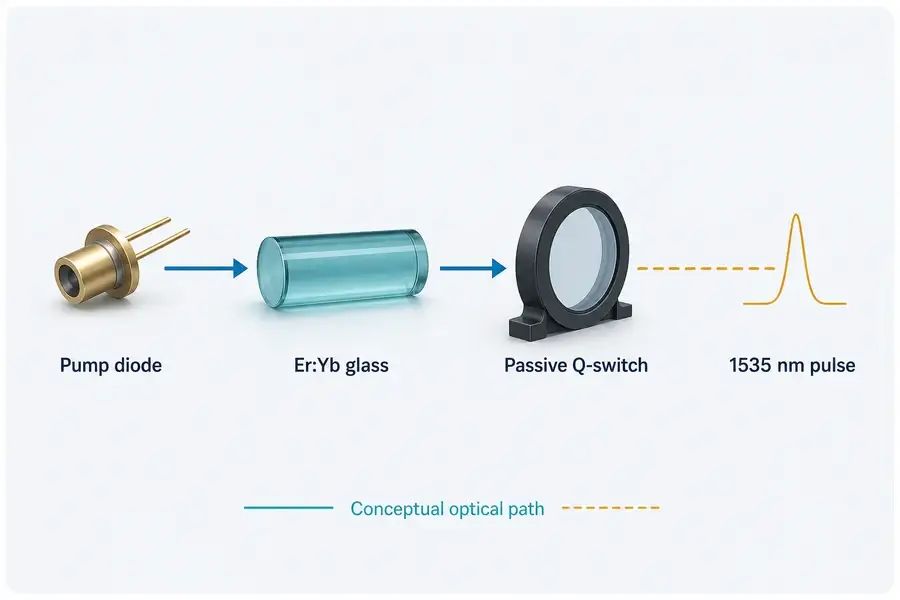
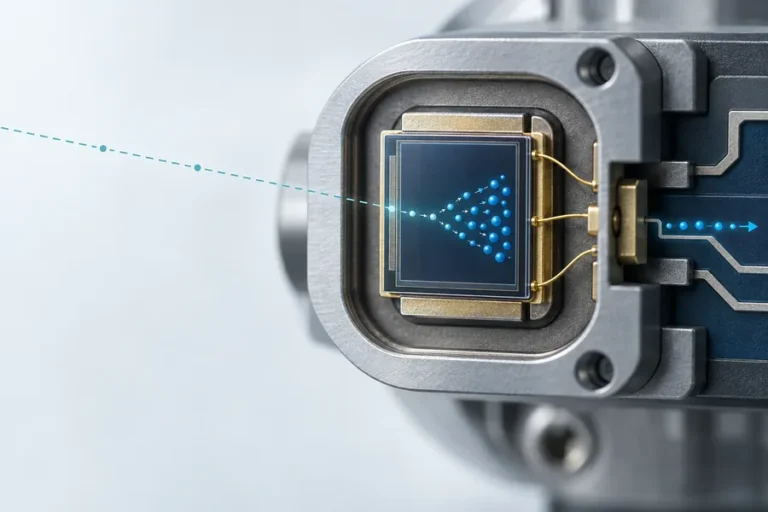
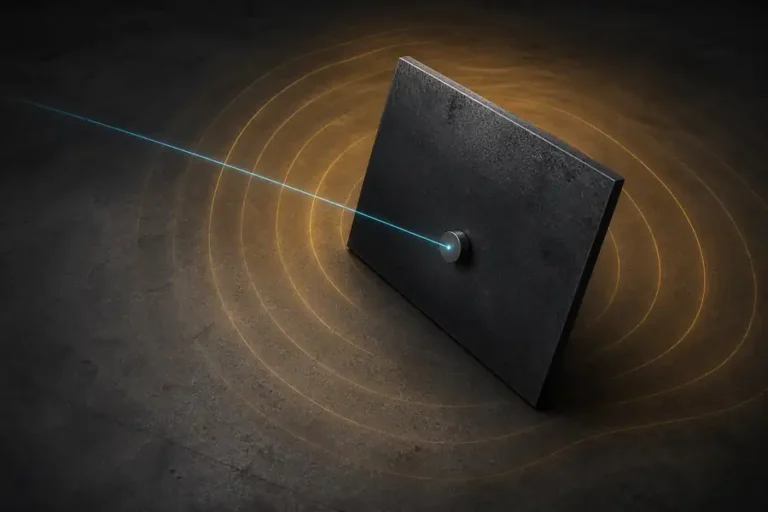
Typical energy-flow concept for a compact Er:Yb glass source. The dashed output is a visual encoding of non-visible radiation, not a product drawing.
How an Erbium Glass Laser Produces a Ranging Pulse
Pump absorption and energy transfer
A semiconductor pump sends light into the doped glass. Erbium ions can provide the laser transition, but their pump absorption is often the limiting step in a compact bulk medium. Ytterbium co-doping is commonly used because ytterbium can absorb pump radiation around the 0.9–1.0 µm region and transfer excitation to erbium.
The useful erbium transition is typically between the ⁴I₁₃/₂ and ⁴I₁₅/₂ manifolds. Depending on glass composition and cavity design, emission falls within roughly 1.53–1.6 µm. A controlled specification should state the actual center wavelength and tolerance.
The pumped volume should overlap the resonator mode without creating excessive local heating. A source can meet its pulse-energy target at room temperature yet change after warm-up if pump wavelength, absorption, alignment, or thermal lensing moves away from its design point.
Passive Q-switching
Many compact Er:glass transmitters use passive Q-switching. A saturable absorber initially holds the resonator at high loss while pump energy accumulates in the gain medium. When the intracavity intensity reaches the switching condition, the absorber becomes more transmissive and the cavity releases a short pulse.
This approach can support a small optical package because it does not require an actively driven intracavity modulator. The trade-off is that pulse energy, delay, duration, and repetition behavior remain coupled to pump conditions, absorber properties, cavity loss, and temperature. An OEM should evaluate those variables as a set, not as independent lines on a datasheet.
For broader context on gain media and resonators, see our solid-state laser guide.
Why Er:Glass Fits Compact Pulsed Rangefinding
Erbium-doped bulk glass can store pump energy and release it through a compact Q-switched cavity. That combination makes it useful when a ranging transmitter needs short pulses from a small source package. The 1.5 µm spectral region also changes the ocular absorption path compared with shorter near-infrared wavelengths.
That last point needs precise language. Wavelength is an input to a laser-product safety assessment; it is not a classification by itself. The accessible emission, pulse pattern, aperture, optics, operating modes, and final enclosure all affect the finished product. IEC 60825-1 defines classification and equipment requirements for laser products, so a supplier should provide evidence tied to the exact product configuration rather than a general wavelength claim.
The source also has practical limits. Glass hosts generally remove heat less effectively than many crystalline hosts. Repetition rate, pump pulse conditions, mounting, and duty cycle must therefore be reviewed together. The right architecture is not the one with the largest isolated pulse number; it is the one that remains stable at the intended operating point.
Source, Transmitter, and Rangefinder Are Different Boundaries
Confusing these boundaries is one of the most common causes of specification gaps.
| Boundary | What it contains | Evidence an OEM should request |
|---|---|---|
| Er:glass source | Pump input, gain medium, cavity, Q-switch, output interface | Pulse energy, width definition, wavelength, beam conditions, temperature and drive conditions |
| Transmitter assembly | Source plus collimation, alignment, window, and mechanical mounting | Output beam geometry, boresight, stray-light control, thermal path, installed pulse behavior |
| Complete rangefinder | Transmitter, receiver, timing electronics, algorithms, housing, and interfaces | Target-conditioned range, accuracy method, false-return behavior, operating modes, qualification records |
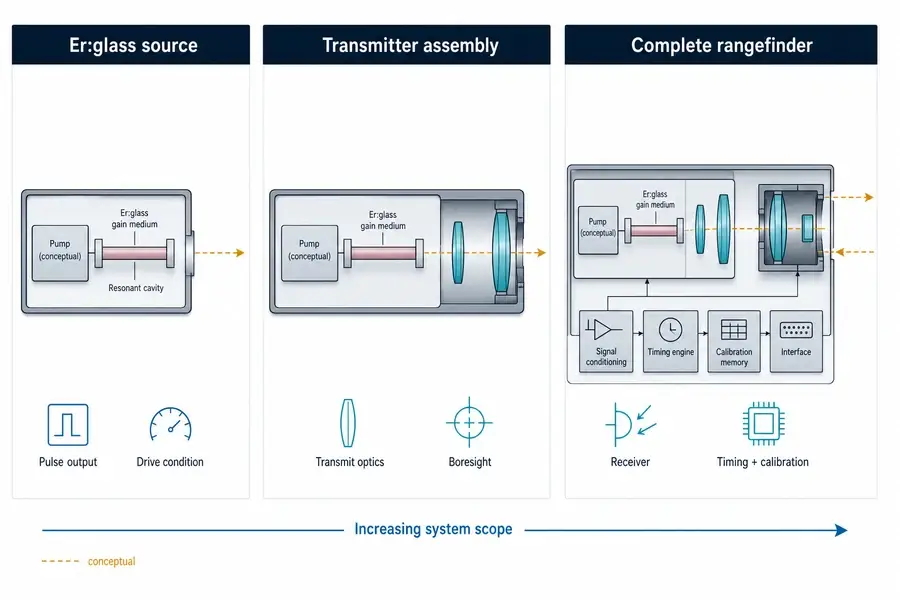
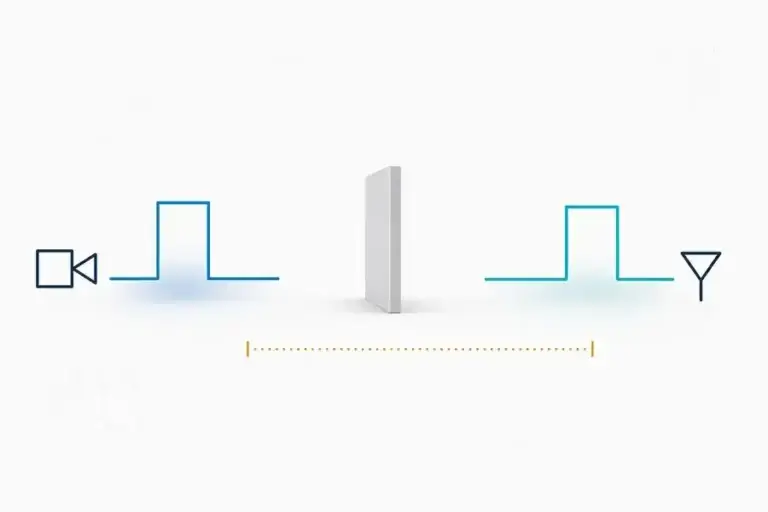
The source generates the pulse; system-level ranging performance appears only after transmit optics, receiver, timing, and calibration are included.
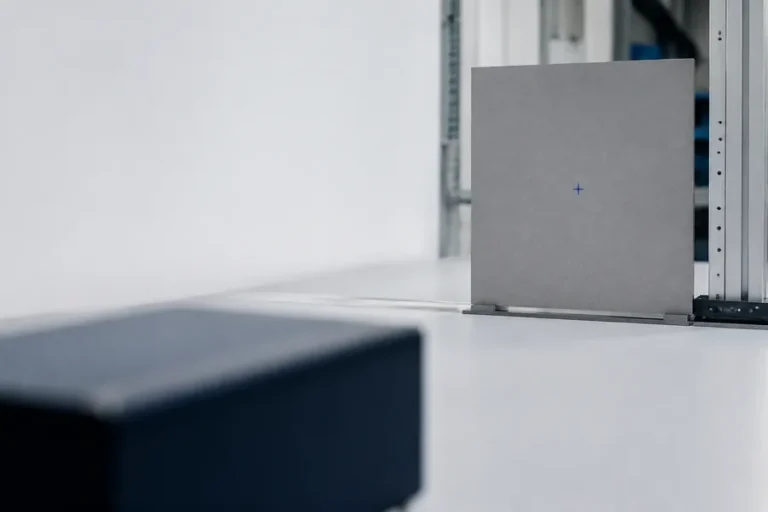
A source pulse-energy value cannot establish range on its own. Received signal strength also depends on beam divergence, transmit throughput, target reflectance and angle, atmospheric loss, receiver aperture, detector response, optical filtering, alignment, and the decision logic used to accept a return.
Pulse duration is relevant to temporal resolution, but it does not equal distance accuracy. Detector bandwidth, timing jitter, calibration, target geometry, and signal processing can all shift the result.
Erbium Glass Laser vs Erbium-Doped Fiber Laser
Both technologies can operate near 1.5 µm, but they are not interchangeable architectures.
An Er:glass source uses a bulk glass element inside a free-space resonator. A pulsed erbium-doped fiber laser guides light through doped fiber and may use a seed-and-amplifier architecture. Their packaging, interfaces, and thermal behavior differ.
The correct choice depends on the required pulse format, repetition behavior, beam delivery, package envelope, thermal path, and production economics. Avoid substituting one technology based only on wavelength. Ask how the quoted output is measured and what changes when the source is installed in your transmitter.
What to Verify Before OEM Integration
Begin with the operating point. Request pulse energy, pulse duration, wavelength, repetition rate, and beam data at the relevant drive settings and temperatures. Confirm how pulse width is defined, where energy is measured, and whether the value is typical, minimum, or maximum.
Next, review the interfaces. The mechanical datum, mounting flatness, heat path, electrical pulse requirements, optical-axis reference, and output-aperture clearance can determine whether a good source remains good inside the host instrument. A dimensional drawing without tolerances or datum logic is not enough for repeatable assembly.
Then define the verification plan. Sample testing should include warm-up behavior, temperature points that represent the intended use, pulse consistency, beam alignment, and the installed transmitter optics. Production acceptance should use controlled fixtures and measurement definitions that can be repeated across lots.
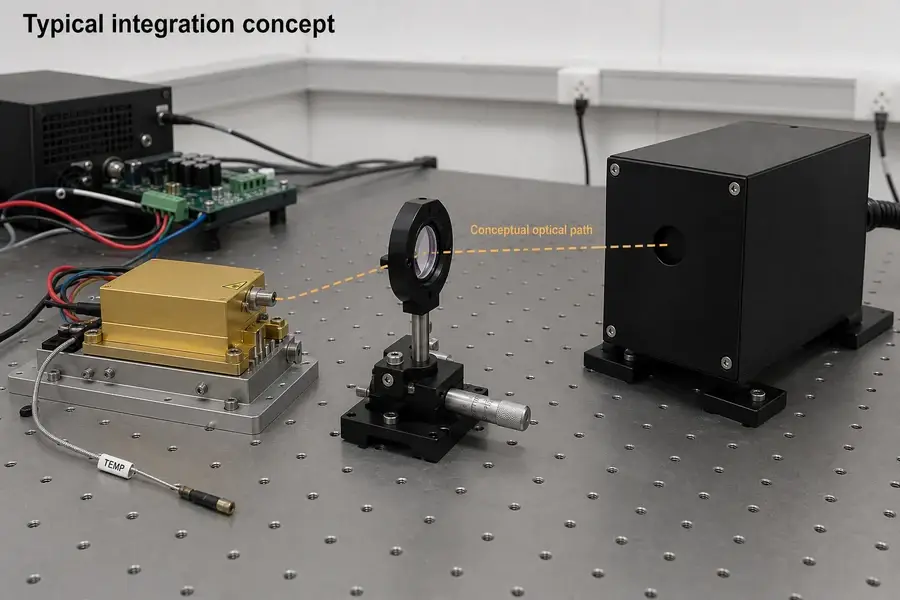
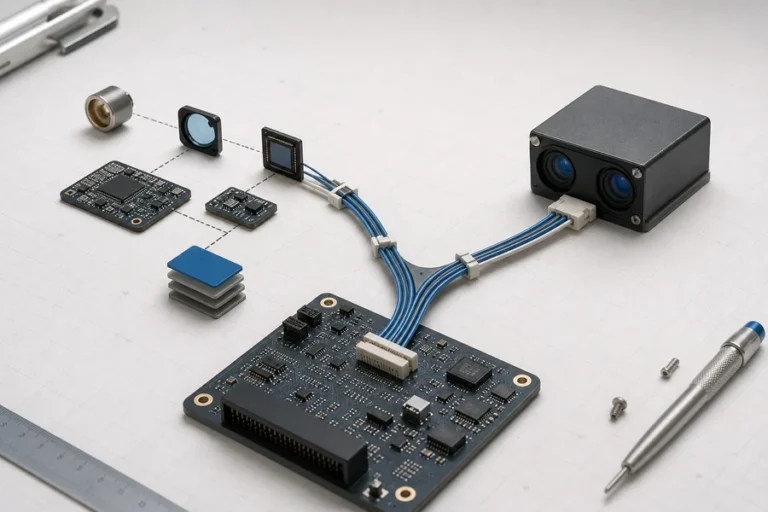
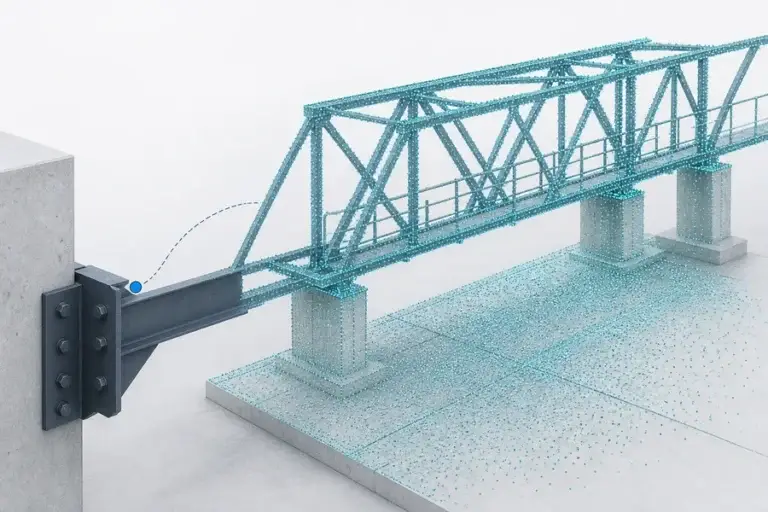
Typical integration concept. The source location, mount, drive, and transmit optics should be reviewed as one coupled assembly.
How We Approach Erbium Glass Laser Sources
At LUMEXIS, erbium-glass laser sources are one of four focused laser platforms. We design and manufacture the source while connecting optical and optomechanical work with semiconductor packaging, electronics, firmware, thermal management, and test-method development.
Our production logic starts before final inspection: incoming inspection, chip testing, die bonding, mounting and soldering, optical alignment where applicable, hermetic sealing, aging screening, and final performance testing. The purpose is consistent output across time and production lots, not a single strong laboratory sample. You can review our broader laser engineering capabilities.
For an OEM program, the useful conversation begins with the required pulse format, repetition behavior, optical interface, mounting envelope, operating temperature, and the complete rangefinder architecture. Those inputs allow the source and qualification plan to be matched to the instrument rather than chosen from one headline number.
FAQ
What wavelength does an erbium glass laser use?
Erbium-doped glass commonly supports laser emission in the 1.53–1.6 µm region, depending on the glass composition, dopants, cavity optics, and operating conditions. Compact ranging sources are often specified near 1535 nm, but the exact center wavelength and tolerance should come from the controlled product specification.
Why is ytterbium added to erbium glass?
Ytterbium can act as a sensitizer. It absorbs pump light efficiently in a useful diode-pump band and transfers energy to erbium ions, which support emission near 1.5 µm. The benefit depends on composition, concentration, pump overlap, and thermal design; co-doping is an architecture choice, not a universal performance guarantee.
Is an Er:glass laser the same as an erbium-doped fiber laser?
No. An Er:glass source uses a bulk doped-glass gain element in a free-space cavity. An erbium-doped fiber laser uses a guided-wave gain medium and often a different pulse-generation or amplification structure. They may share a spectral region, but their packaging, thermal behavior, interfaces, and scaling trade-offs differ.
Does an Er:glass source determine the rangefinder’s maximum distance?
Not by itself. Pulse energy and beam conditions influence the transmitted signal, but range also depends on target reflectance and angle, transmit optics, atmosphere, receiver aperture, detector sensitivity, alignment, filtering, and signal processing. Compare range only when those test conditions and the acceptance criterion are stated.
Is every 1535 nm laser product Class 1?
No. Wavelength affects the hazard analysis, but classification depends on accessible emission and the complete product configuration under the applicable standard. Ask for controlled evidence that identifies the exact model, optical configuration, operating modes, and test conditions. Do not infer a product classification from wavelength alone.
If you are evaluating an erbium glass laser rangefinder or a 1535 nm source for a civil, industrial, or scientific instrument, contact our engineers with your operating point and integration constraints.
References
- RP Photonics Encyclopedia, “Erbium-doped Laser Gain Media,” Dr. Rüdiger Paschotta
- RP Photonics Encyclopedia, “Q-switching,” Dr. Rüdiger Paschotta
- Chinese Physics Letters, “A Passive Q-Switched Microchip Er/Yb Glass Laser Pumped by Laser Diode”
- IEC 60825-1:2014, Safety of laser products — Part 1: Equipment classification and requirements