
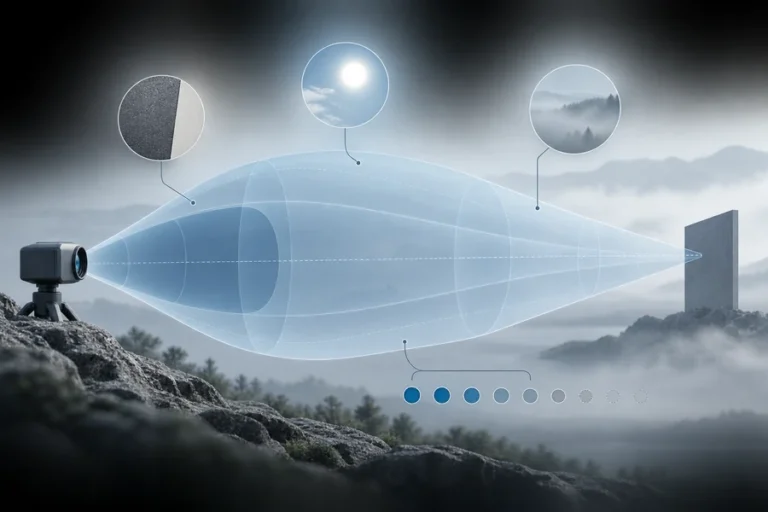

قيمة تباعد صغيرة تبدو جذابة في ورقة البيانات. ومع ذلك، على المدى الطويل، يمكن لشعاع ضيق أن يخطئ هدفًا ضيقًا عندما يحرك خطأ التوجيه، أو حركة المنصة، أو الاهتزاز، أو حركة الهدف البقعة بعيدًا عن النقطة المقصودة.
جعل الشعاع أعرض ليس حلاً مجانيًا. نفس طاقة النبضة تنتشر على مساحة أكبر، لذا يصل قدر أقل إلى هدف صغير وقد يضيء المزيد منها أسطح المقدمة أو الخلفية.
تباعد شعاع جهاز تحديد المدى بالليزر يحدد مدى سرعة نمو البقعة المرسلة مع المسافة. تباعد أضيق يركز الطاقة ويحسن الانتقائية المكانية، لكنه يتطلب توجيهًا أدق. تباعد أعرض يزيد التغطية الهندسية، لكنه يقلل الإشعاع على الهدف ويمكن أن يخلط الإشارات. القيمة المثلى تعتمد على حجم الهدف، وعدم اليقين في التوجيه، والمدى، ومجال رؤية المستقبل، واحتمال الكشف الصحيح المطلوب.
ما الذي يحدده تباعد شعاع جهاز تحديد المدى بالليزر فعليًا
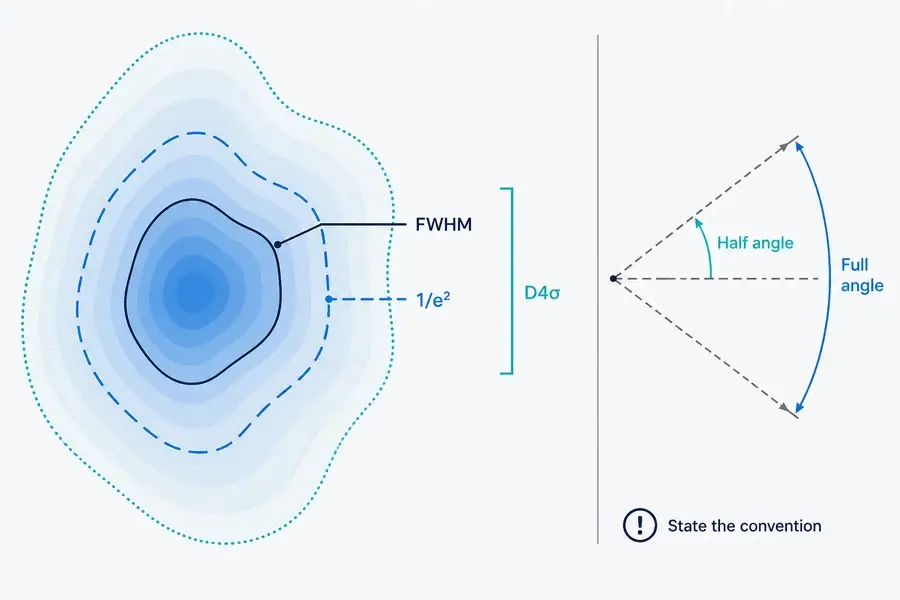
تباعد الشعاع هو وصف زاوي لنمو الشعاع، يُبلغ عنه عادةً بالميلي راديان. إنه ليس مخروطًا صلبًا. الحزم الحقيقية لها توزيع شدة، والحد المذكور يعتمد على كيفية تعريف عرض الشعاع.
لشعاع غاوسي، نصف القطر عند 1/e² هو النقطة التي تنخفض فيها الشدة إلى حوالي 13.5٪ من قيمتها على المحور. العرض الكامل عند نصف الحد الأقصى (FWHM) يصف جزءًا أضيق من نفس الملف. يستخدم ISO 11146 نهج العزم الثاني، أو D4σ، لقياسات عرض الشعاع والانتشار. لا ينبغي مقارنة هذه القيم كما لو كانت قابلة للتبادل.
المواصفة الكاملة تنص على ما إذا كان التباعد زاوية كاملة أو نصف زاوية. الشعاع الإهليلجي يحتاج إلى قيم أفقية ورأسية. اسأل عن ما تم قياسه، وعلى أي محاور، وتحت أي شرط، ومن أي مستوى مرجعي.
دليلنا حول كيف يقيس جهاز تحديد المدى النبضي المسافة يشرح سلسلة توقيت الرحلة ذهابًا وإيابًا المنفصلة.
تحويل التباعد إلى بقعة عند المدى
لقطر شعاع أولي D₀, ، مسافة العمل L, ، وتباعد الزاوية الكاملة Θ, ، تقدير هندسي بسيط هو:
D(L) = D₀ + 2L tan(Θ/2)
عندما تكون الزاوية صغيرة ومعبرًا عنها بالراديان، يصبح هذا تقريبًا D(L) ≈ D₀ + LΘ. لذلك يضيف الميلي راديان الواحد حوالي متر واحد من القطر لكل كيلومتر، قبل النظر في القطر الأولي وتأثيرات الانتشار الأخرى.
يعمل التقدير فقط عندما يكون الاصطلاح واضحًا. استخدام نصف زاوية كزاوية كاملة يخلق خطأً بعامل اثنين في مصطلح النمو. احسب كلا المحورين لشعاع إهليلجي. الهدف المائل يرى أيضًا بقعة ممدودة.
لا تعامل القطر المحسوب كحد حاد يحتوي على إشعاع متساوٍ. ملف الشعاع، والاقتطاع، وتأثيرات النافذة البصرية، وموضع التركيز، وجودة الشعاع تغير توزيع الطاقة داخل وخارج الكفاف المسمى. الـ دليل ورقة بيانات جهاز قياس المدى يسرد الشروط اللازمة لتفسير الهندسة جنبًا إلى جنب مع ادعاءات المدى.
احتمال الإصابة ليس نفس احتمال الكشف
“احتمال الإصابة” يُستخدم غالبًا بشكل فضفاض. نموذج هندسي مفيد يفصل ثلاثة أسئلة على الأقل.
- احتمال الإضاءة: هل يتداخل جزء كافٍ من البقعة المرسلة مع الهدف المقصود، بالنظر إلى خطأ التوجيه والحركة؟
- احتمال الكشف الشرطي: عندما يكون الهدف مضاءً، هل يعبر عائده المستقبل ومعيار المعالجة؟
- احتمال المدى الصحيح: هل يختار النظام الصدى المقصود ويبلغ عن مسافة داخل نافذة الخطأ المسموح بها؟
بقعة أعرض يمكن أن تحسن الاحتمال الأول عندما يهيمن عدم اليقين في التوجيه. قد تقلل الثاني إذا وصل جزء صغير فقط من النبضة إلى الهدف. يمكن أيضًا أن تقلل الثالث بالقرب من الحواف عندما يساهم سطح آخر بصدى أقوى أو أبكر.
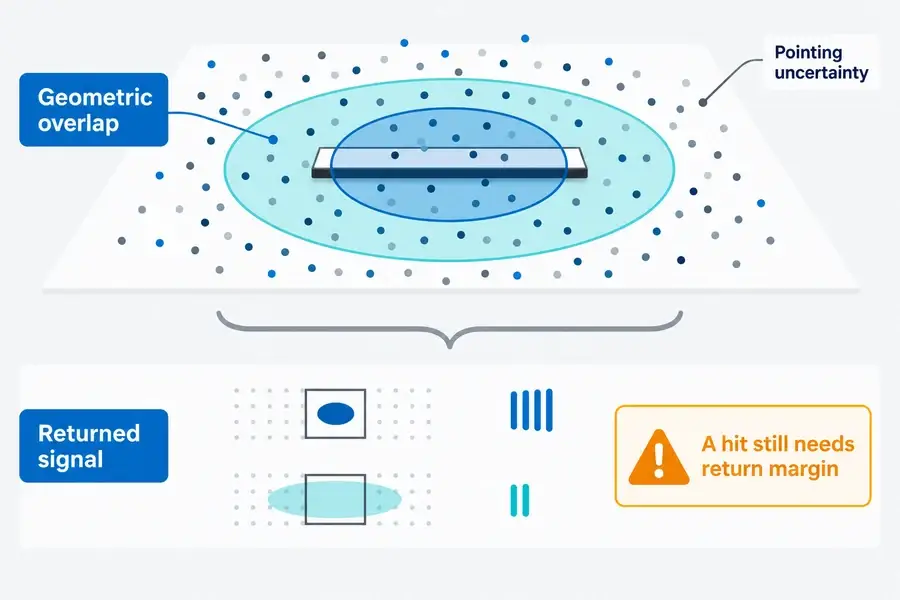
لا تبلغ عن الدقة فقط للقراءات الناجحة. يمكن للنظام الحفاظ على خطأ ضيق على الإشارات المقبولة بينما يخطئ أكثر. سجل الإشارات الخاطئة والغائبة بالإضافة إلى توزيع الخطأ للنتائج الصحيحة.
الحزم الأضيق والأعرض تحل مشاكل مختلفة
لا يوجد اتجاه أفضل عالميًا. ميزانيات الخطأ والإشارة المهيمنة هي التي تقرر.
| مصدر القلق التصميمي | التباعد الأضيق يميل إلى المساعدة | التباعد الأعرض يميل إلى المساعدة | تحقق قبل الاختيار |
|---|---|---|---|
| مدى طويل أو عائد منخفض | إشعاع هدف أعلى عند المحاذاة | — | طاقة النبضة، اعتراض الهدف، الغلاف الجوي، حساسية المستقبل |
| ميزة صغيرة بالقرب من الخلفية | الانتقائية المكانية | — | استقرار التوجيه وملف الشعاع |
| ارتعاش التوجيه أو حركة الهدف | — | تحمل التداخل الهندسي | هامش العائد عبر البقعة الأكبر |
| هدف صغير بموقع غير مؤكد | يمكن أن يخطئ خارج البصمة الضيقة | يمكن أن يغطي المزيد من عدم اليقين في الموضع | جزء النبضة الذي يتم اعتراضه فعليًا |
| أسطح متعددة بالقرب من حافة | تضمين خلفية أقل | — | سلوك اختيار الصدى ودقة المدى |
| قبول المستقبل | لا يضبط مجال رؤية المستقبل | لا يضبط مجال رؤية المستقبل | محاذاة الإرسال/الاستقبال والتفاوتات الزاوية |
تفترض المقارنة أن المتغيرات الأخرى تظل ثابتة، وهو أمر نادر عبر الوحدات. يمكن أن يتغير التباعد مع بصريات الخروج، أو الفتحة، أو جودة الشعاع، أو درجة الحرارة، أو تفاوتات التجميع، أو النافذة البصرية. راجع تصميم المرسل والمستقبل بالكامل.
بالنسبة لحدود المصدر مقابل النظام، راجع نظرة عامة على مصدر ليزر القياس. تساعد الصفحة في التمييز بين معلمة مصدر الليزر وأداء وحدة قياس المدى الكاملة.
البصمات الجزئية يمكن أن تنتج عوائد ضعيفة أو مختلطة
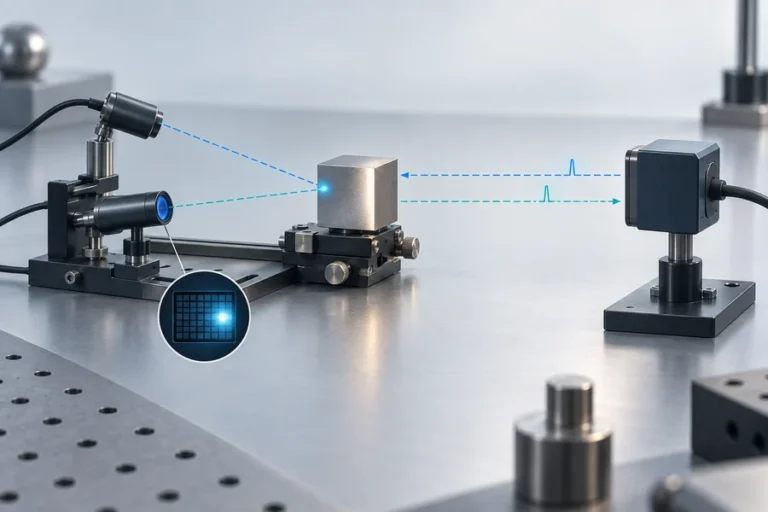
عندما يكون الهدف أكبر من البصمة ومتمركزًا عليها، يمكن أن يتفاعل تقريبًا كل الطاقة الساقطة مع ذلك السطح. إذا اعترض الهدف جزءًا فقط من البصمة، تذهب الطاقة المتبقية إلى مكان آخر. قد يولد جسم أمامي داكن أمام جدار ساطع عائدًا أضعف من الخلفية حتى لو لمسه الشعاع هندسيًا.
إذا كانت الأمامية والخلفية على مديات مختلفة، يمكن أن تتداخل مساهماتهما أو تشكل أصداء منفصلة اعتمادًا على عرض النبضة، وفصل المدى، وعرض نطاق المستقبل، والمعالجة. يمكن لقواعد الأول والثاني والأقوى والأخير اختيار أسطح مختلفة. لا يمكن لبيان واحد “الشعاع يضرب الهدف” التنبؤ بالمسافة المبلغ عنها.
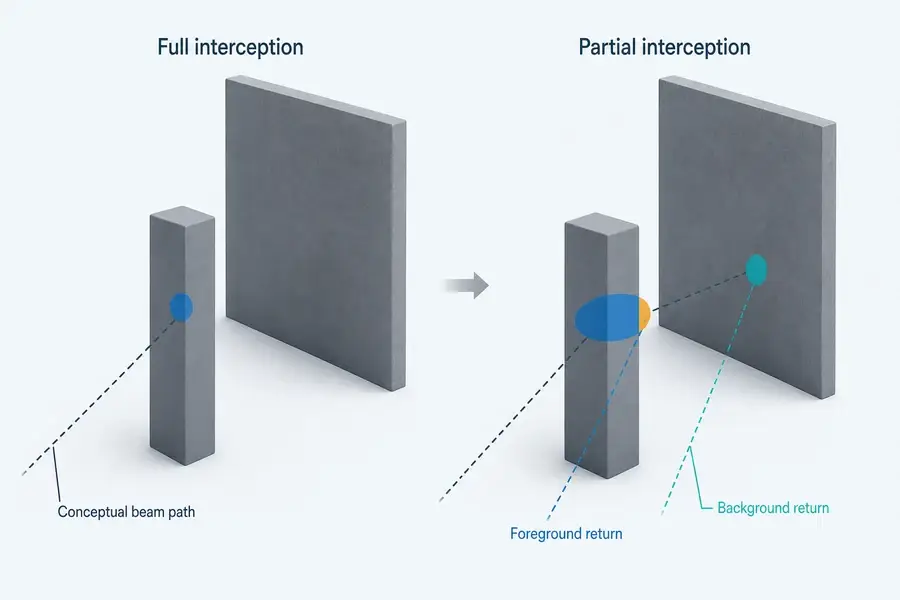
تستخدم دراسات البكسل المختلط المراجعة من قبل الأقران هندسة أمامية/خلفية خاضعة للتحكم لتوصيف هذا التأثير. كما تشترط مواصفات LiDAR الجوية الخاصة بالمنتج بيان اكتشاف الهدف على اعتراض كافٍ للبصمة. تدعم تلك المصادر الآلية، وليس رقم أداء Lumexis قابلًا للنقل.
التباعد ومجال رؤية المستقبل مختلفان
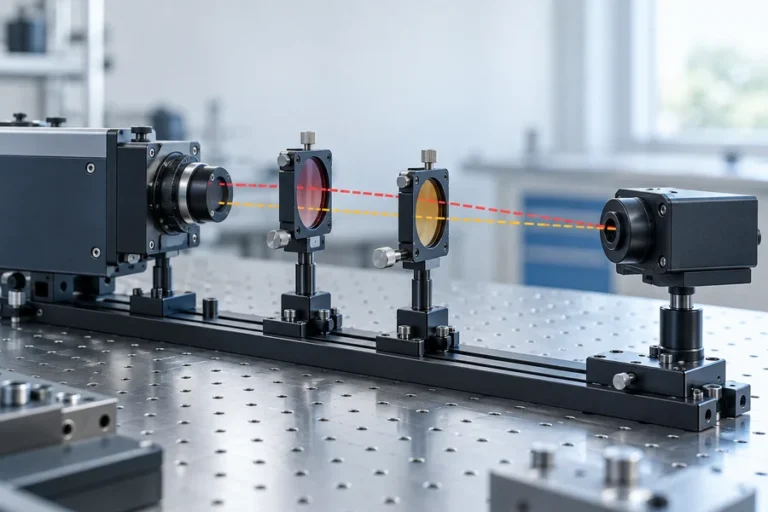
يحدد تباعد الإرسال أين يتم إرسال طاقة النبضة. يحدد مجال رؤية المستقبل المنطقة الزاوية المقبولة بواسطة بصريات الاستقبال والكاشف. يتفاعلان من خلال المحاذاة والمواءمة، لكن أحدهما لا يحل محل الآخر.
يمكن لمرسل واسع مقترن بمستقبل ضيق أو غير محاذى أن يضيء مواضع لا يقبلها المستقبل. قد تؤدي زيادة مجال رؤية المستقبل إلى تحسين التفاوت الزاوي، لكنها يمكن أن تسمح أيضًا بمزيد من الخلفية وتتطلب مراجعة كاملة للإشارة إلى الضوضاء. تظل الفتحة، وعرض نطاق المرشح، ومنطقة الكاشف، والطول البؤري، والمعالجة جزءًا من النتيجة.
دليل أنواع وحدات قياس المدى بالليزر يوفر الدليل سياقًا معماريًا إضافيًا دون معالجة تخطيط بصري واحد كمعيار عالمي.
ما الذي تطلبه في ورقة البيانات
اطلب أكثر من قيمة mrad واحدة:
- اصطلاح الزاوية الكاملة أو نصف الزاوية؛;
- 1/e²، أو FWHM، أو D4σ، أو الطاقة المحاطة، أو تعريف عرض آخر؛;
- التباعد الأفقي والرأسي مع التفاوت؛;
- قطر الخروج، ومستوى الخصر/المرجع، وحالة التركيز؛;
- درجة حرارة التشغيل، وحالة القيادة، والنافذة، وأساس الدفعة/العينة؛;
- تفاوت محاذاة المرسل إلى المستقبل ومجال رؤية المستقبل؛;
- حجم الهدف، والانعكاسية، والمدى، والغلاف الجوي، وحالة اعتراض البصمة؛;
- عتبة الكشف، وعدد المحاولات، وتعريف المدى الصالح، ومعالجة الخطأ/عدم العائد.
أفضل مواصفة تتيح لك إعادة إنتاج الادعاء. القيمة الاسمية النظيفة دون تفاوت أو تعريف قياس يصعب حملها في ميزانية خطأ OEM.
تحقق من تباعد الشعاع في النظام المثبت
قم بقياس التكوين البصري النهائي، بما في ذلك نافذته الواقية وتركيبه. حدد الملف الشخصي على عدة مسافات، ثم اختبر عدة أحجام أهداف عند الانعكاسية والمدى المطلوبين.
طبق إزاحات أفقية ورأسية خاضعة للتحكم تغطي خطأ المحاذاة، والاهتزاز، والحركة، وتفاوت التجميع. كرر نبضات كافية في كل موضع للإبلاغ عن العوائد الصالحة والخاطئة والغائبة. أضف حالة حافة مع هدف أمامي وخلفية على مدى مختلف.
| مجموعة الاختبار | الاحتفاظ أو التسجيل | النتيجة |
|---|---|---|
| هندسة الحزمة | المسافة، والمحور، واصطلاح العرض، ودرجة الحرارة، والنافذة | القطر/الملف الشخصي والمركز |
| تداخل الهدف | حجم الهدف، والانعكاسية، والزاوية، والإزاحة | تغطية الإضاءة وقوة العائد |
| كشف النظام | مجال رؤية المستقبل، والوضع، والعتبة، والظروف المحيطة | معدلات الصالح والخاطئ وعدم العائد |
| سلوك الحافة | مديات وانعكاسيات الأمامية/الخلفية | الصدى المحدد وخطأ المسافة |
دليل حل قياس المدى بالليزر يظهر سياق النظام المدني والصناعي. يمكن لـ Lumexis صفحات الخدمات الهندسية دعم اختيار الوحدة، والتكامل، والتحقق، واستكشاف الأخطاء وإصلاحها عندما يكون غلاف الهدف والتوجيه الكامل متاحًا.
ما يجب إرساله إلى Lumexis لمراجعة الوحدة
شارك المدى وحجم الهدف والانعكاسية واحتمال الكشف الصالح المطلوب وتوزيع خطأ التوجيه واصطلاح تباعد شعاع محدد المدى بالليزر ومحاوره ومجال رؤية المستقبل والنافذة ومعدل التحديث والبيئة.
يمكن لمهندسي التطبيقات لدينا مراجعة معيار وحدة جهاز قياس المدى بالليزر القياسية كنقطة بداية أو متطلب مخصص/خاص. لا يزال احتمال الإصابة النهائي بحاجة إلى دليل من التكوين البصري والميكانيكي المركّب.
الأسئلة الشائعة
هل التباعد الأقل للشعاع أفضل دائمًا لمحدد المدى؟
لا. التباعد الأقل يركّز طاقة النبضة ويقلل فرصة تضمين الأسطح القريبة، لكنه أيضًا يشدد متطلبات التوجيه والمعايرة. قد يحسّن الشعاع الأوسع قليلًا التداخل الهندسي عندما تهيمن الحركة أو عدم اليقين في المحاذاة. اختر بناءً على هامش عودة الهدف وميزانية الخطأ الزاوي الكاملة معًا.
ما حجم شعاع 1 ملي راديان عند 1 كم؟
باستخدام تقدير الزاوية الكاملة والزاوية الصغيرة، يضيف 1 ملي راديان حوالي 1 متر إلى قطر الشعاع على مسافة 1 كم. أضف قطر الشعاع الابتدائي وتأكد مما إذا كان المورّد يحدد الزاوية الكاملة أو نصف الزاوية أو 1/e² أو FWHM أو تعريفًا آخر. لا يوجد حد صلب للإشعاع الحقيقي عند القطر المحسوب.
هل يجب أن تذكر ورقة البيانات التباعد بالزاوية الكاملة أم نصف الزاوية؟
يمكن استخدام أي منهما إذا ذُكر بوضوح. المشكلة هي رقم غير مُصنّف. اطلب الزاوية الكاملة مقابل نصف الزاوية، واصطلاح العرض، وكلا محوري الشعاع، والتفاوت، والمستوى المرجعي، وظرف القياس. حوّل جميع المرشحين إلى الاصطلاح نفسه قبل مقارنتها.
هل يغيّر تباعد الشعاع دقة المسافة؟
لا يغيّر التباعد سرعة الضوء أو معادلة زمن الطيران الأساسية. يمكنه تغيير السطح الذي يساهم في الصدى المقبول، وسعة العودة، واحتمال تلقي نتيجة صالحة. بالقرب من الحواف أو الأسطح المائلة، يمكن أن تغيّر تلك التأثيرات المسافة المُبلّغ عنها أو تزيد القراءات غير الصالحة.
كيف يتفاعل خطأ التوجيه مع تباعد الشعاع؟
يزيح خطأ التوجيه مركز الشعاع؛ ويحدد التباعد مقياس البصمة عند المدى. قد تتداخل بصمة أوسع مع هدف عبر إزاحات توجيه أكثر، لكن كل إزاحة قد تعترض جزءًا مختلفًا من طاقة النبضة. تحقق من توزيعهما المشترك بدلًا من مقارنة رقم توجيه اسمي واحد برقم تباعد اسمي واحد.
أرسل هدفك ومداك ومغلف التوجيه وتعريف التباعد ومجال رؤية المستقبل والنافذة ومعيار النجاح/الفشل عبر صفحة الاتصال في Lumexis. يمكننا تحديد نقطة بداية لوحدة قياسية أو تعريف الأدلة اللازمة لتكوين مخصص.
المراجع
- ISO. ISO 11146-1:2021 — طرق اختبار عروض الشعاع وزوايا التباعد ونسب انتشار الشعاع
- موسوعة RP Photonics. نصف قطر الشعاع
- كروابيتش، س. وويدجاجا، ج. محدد مدى ليزر باستخدام معادلة مدى شعاع غاوسي
- يانغ، ب. وآخرون. نمذجة تحديد المدى بالليزر تحت تأثير البكسلات المختلطة المعمم