

المستشعر الأفضل هو الذي يتلقى إرجاعًا موثوقًا من الهدف المقصود—دون قياس شيء قريب بالخطأ.
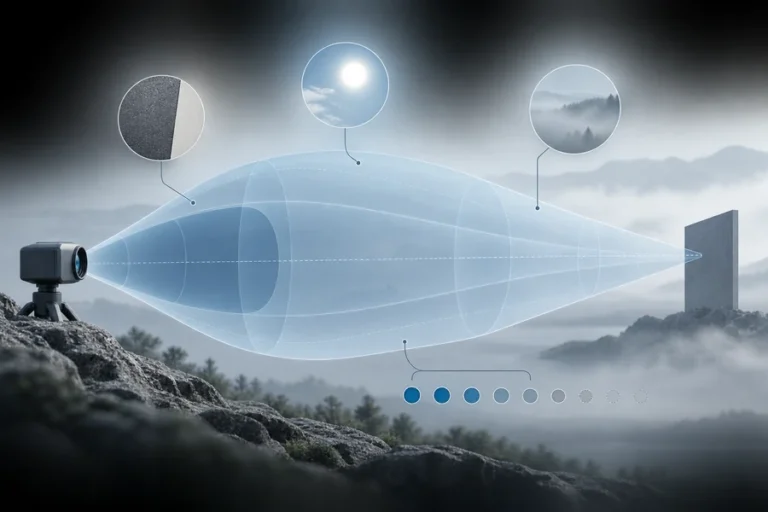
بالنسبة لمعظم مستشعر المسافة بالليزر مقابل مستشعر المسافة بالموجات فوق الصوتية القرارات، ابدأ ببصمة الاستشعار. عادةً ما يوفر جهاز قياس المسافة بالليزر خط رؤية ضيقًا وقابلاً للتحديد، وهو مناسب للأهداف الصغيرة والحواف والمسافات الأطول والقياس السريع الموضعي. تغطي الموجات فوق الصوتية منطقة استجابة صوتية أوسع ويمكن أن تكون مفيدة عندما يكون لون الهدف أو الانعكاس البصري مزعجًا، بشرط أن يعكس السطح الصوت مرة أخرى نحو محول الطاقة.
لا يفوز أي من المبدأين في كل تطبيق. تحدد هندسة الهدف والبيئة ومعدل التحديث وسلوك المدى القريب والتركيب وقاعدة القبول لدى المضيف النتيجة.
الإجابة السريعة: طابق المستشعر مع مسار الإرجاع
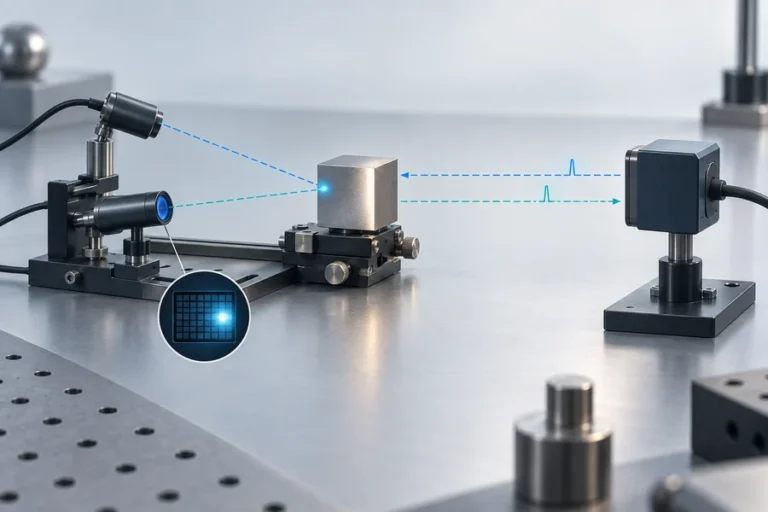
يمكن لكلتا التقنيتين تقدير المسافة من زمن الرحلة ذهابًا وإيابًا. يرسل نظام الليزر ضوءًا ويكتشف إرجاعًا بصريًا. يصدر مستشعر الموجات فوق الصوتية دفعة صوتية ويستمع إلى صدى صوتي. نفس فكرة المعادلة—المسافة من زمن الانتشار—لا تمنحهما نفس السلوك الميداني.
| عامل الاختيار | مستشعر المسافة بالليزر | مستشعر المسافة بالموجات فوق الصوتية |
|---|---|---|
| ما الذي يفحصه | خط رؤية بصري ضيق ونقطة | منطقة استجابة صوتية أوسع |
| حالة استخدام قوية | أهداف صغيرة أو محددة، حواف، مسافات أطول، تحديثات موضعية سريعة | أسطح واسعة حيث يتغير اللون أو الانعكاس البصري |
| حساسية الهدف | الانعكاس البصري، الانعكاسية المرآتية، الشفافية، الزاوية، وبصمة الشعاع | الانعكاس الصوتي، الامتصاص، الزاوية، الحجم، وشكل السطح |
| المخاوف البيئية | الخلفية البصرية المحيطة، العوائق، تلوث النافذة، المحاذاة | درجة حرارة الهواء، الاضطراب، الأمطار الغزيرة أو الغبار، التداخل بنفس التردد |
| المدى القريب | يعتمد على المستقبل وهندسة التوقيت | غالبًا ما يتضمن منطقة ميتة بينما يتوقف محول الطاقة عن الرنين |
| أفضل مقارنة | نفس الهدف والمسافة والزاوية والمعدل والبيئة وقاعدة القراءة الصالحة | نفس الظروف المشتركة—وليس رقمًا معزولًا من ورقة البيانات |
لسلسلة القياس البصري، انظر كيفية عمل جهاز قياس المسافة بالليزر.
النقطة البصرية الضيقة مقابل منطقة الاستجابة الصوتية الواسعة
غالبًا ما يكون الاختلاف الأكثر أهمية ليس الدقة الاسمية. بل هو أي سطح فيزيائي يساهم في الإرجاع.
يمكن تصميم جهاز قياس المسافة بالليزر بنقطة صغيرة نسبيًا عند الهدف. يساعد ذلك في تحديد ميزة ضيقة، وتجنب خلفية قريبة، والقياس بالقرب من حافة، أو اتباع خط رؤية محدد. لا تزال البصمة المفيدة تتوسع مع التباعد ويمكن أن تتأثر بعدم اليقين في التوجيه والحركة. يوضح دليل ورقة بيانات وحدة قياس مدى الليزر لماذا ينتمي حجم النقطة وشروطه المعلنة إلى مراجعة النظام.
يستجيب مستشعر الموجات فوق الصوتية عبر مجال صوتي يتسع مع المسافة. منحنيات استجابة الشركة المصنعة أكثر فائدة من معاملته كمخروط هندسي مثالي: حجم الهدف، الموضع الجانبي، إعدادات الحساسية، والفصوص الجانبية يمكن أن تغير ما ينتج أول صدى مقبول أو أقوى صدى.
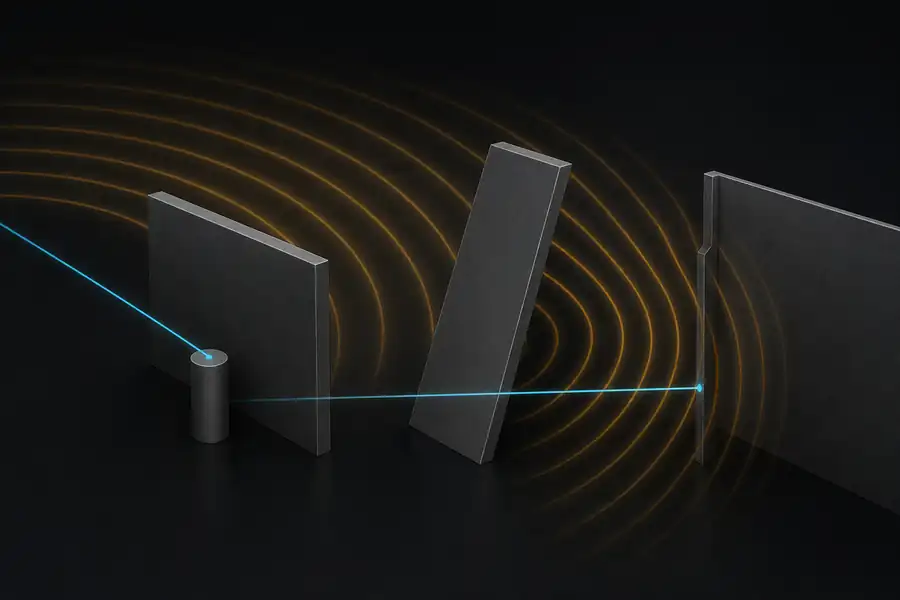
هذا الاختلاف مهم حول حواف السكك الحديدية، الثقوب، الأنابيب، الألواح المائلة، التعبئة غير المنتظمة، والهياكل الآلية المجاورة. قد يحدد الليزر الميزة الصغيرة المقصودة بينما تبلغ الموجات فوق الصوتية عن سطح مجاور أكبر. في مشهد آخر، قد يفوت المسار البصري الضيق هدفًا واسعًا متحركًا يظل داخل منطقة استجابة الموجات فوق الصوتية.
حدد الحد الأدنى لحجم الهدف، وخطأ التوجيه المسموح، والخلوص من الحواف، والهياكل القريبة. “المسافة إلى الجسم” ليست مكتملة حتى يتم تعريف الجسم ومنطقة الإرجاع المقبولة.
خصائص الهدف: الانعكاس ليس انعكاسًا صوتيًا
“الموجات فوق الصوتية مستقلة عن اللون” مفيدة ولكنها غير مكتملة. لون الهدف والانعكاس البصري ليسا نفس الانعكاسية الصوتية.
عندما يصبح الإرجاع البصري صعبًا
يمكن للأسطح الداكنة أو منخفضة الانعكاس أن تقلل الإشارة البصرية المستقبلة. قد توجه الأسطح شديدة الانعكاس الضوء بعيدًا عن المستقبل، بينما يمكن للمواد الشفافة أو شبه النفاذة أن تولد إرجاعات ضعيفة أو مزاحة أو متعددة. يمكن للخلفية البصرية المحيطة القوية والنافذة الملوثة أن تقلل هامش الإشارة أكثر.
تعتمد هذه التأثيرات على الطول الموجي، مادة الهدف وتشطيبه، الزاوية، حجم النقطة، فتحة المستقبل والترشيح، معدل القياس، ومعالجة الإشارة. انعكاسية الهدف في قياس المسافة بالليزر يصف لماذا لا يكفي ادعاء عام واحد عن “الهدف الداكن”.
عندما يصبح الصدى الصوتي صعبًا
لا تهتم الموجات فوق الصوتية باللون المرئي، لكنها لا تزال بحاجة إلى طاقة صوتية للعودة إلى محول الطاقة. الأهداف الناعمة أو المسامية أو الممتصة للصوت مثل بعض الرغوات والأقمشة يمكن أن تضعف الصدى. يمكن للسطح الأملس المائل أن يحرف الصوت بعيدًا. قد لا تعترض الأجسام الصغيرة ما يكفي من منطقة الاستجابة، والأسطح الخشنة أو المتغيرة يمكن أن تنتج أصداء متغيرة.
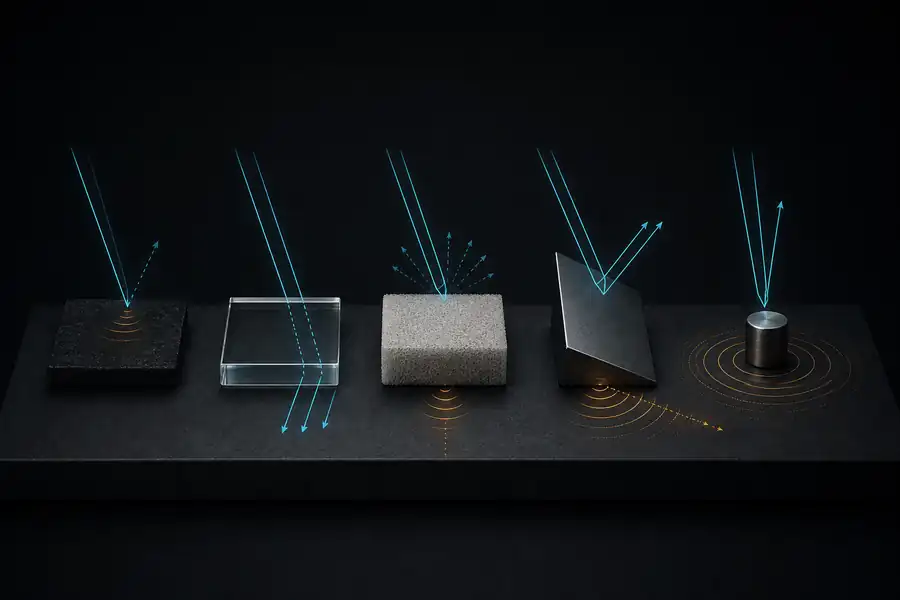
الزجاجات الشفافة أو الأسطح السائلة ليست إذن فوزًا تلقائيًا للموجات فوق الصوتية. يمكن أن تكون الموجات فوق الصوتية فعالة عندما توفر الهندسة صدى مستقرًا، لكن الرغوة والاضطراب وزاوية الهدف والدواخل الداخلية للحاوية وتركيب محول الطاقة لا تزال تتطلب اختبارًا. وبالمثل، قد يعمل حل الليزر جيدًا عندما يكون المسار البصري والمستقبل مصممين للمادة الفعلية بدلاً من تسمية هدف عامة.
البيئة والتوقيت يغيران النتيجة
يستجيب الليزر والموجات فوق الصوتية لأجزاء مختلفة من البيئة.
بالنسبة لقياس المدى بالليزر، راجع الخلفية الضوئية المحيطة، والضباب أو الجسيمات العالقة، والمطر، وتلوث النافذة، وانحراف المحاذاة، وإشارة الهدف. يمكن للمعيقات أن توهّن أو تشتت الضوء الصادر والعائد معًا؛ ويعتمد تأثيرها على طول المسار، وتوزيع الجسيمات، والطول الموجي، وتصميم المستقبل، ومنطق القرار. راجع النقاش المؤهل حول أجهزة قياس المدى بالليزر في الضباب.
بالنسبة للموجات فوق الصوتية، الهواء جزء من مسار القياس. تتغير سرعة الصوت مع درجة الحرارة، لذا فإن التعويض والتثبيت الحراري مهمان. يمكن للاضطراب القوي أو نفاثات الهواء أن تعطل الانتشار. يمكن للغبار الكثيف أو المطر أو الثلج أن يقلل من الطاقة الصوتية أو المدى المفيد، حتى لو كان الرذاذ الخفيف أو الرواسب الصغيرة مقبولًا لدى أجهزة استشعار صناعية معينة.
تحتوي الأنظمة فوق الصوتية أيضًا على قيود توقيت يسهل التغاضي عنها:
- يمكن للمحول أن يستمر في الاهتزاز بعد الإرسال، مما يخلق منطقة ميتة قريبة المدى قبل أن يتمكن من الاستماع بشكل موثوق.
- يمكن لأجهزة استشعار فوق صوتية متعددة تعمل بالقرب من بعضها أن تتداخل ما لم يتم التحكم في التركيب أو المزامنة أو تعدد الإرسال.
- يمكن للضوضاء القريبة من تردد التشغيل والمعدات الهوائية أن تعطل مسار الإرجاع.
- يمكن أن يحد انتشار الصوت ووقت انتظار الصدى من سرعة التحديث، خاصة على المسافات الأطول.
لا تحوّل هذه الاتجاهات إلى تصنيفات عالمية. قد يتعامل مستشعر فوق صوتي معين معوض جيدًا مع بيئته المقدرة؛ وقد يرفض نظام بصري معين الضوء المحيط بفعالية. قارن التكوينات المثبتة الكاملة.
قارن الأداء المثبت، وليس المواصفات الرئيسية
الدقة والمدى الأقصى والسرعة والطاقة والتكلفة تصبح قابلة للمقارنة فقط بعد محاذاة الظروف.
استخدم نفس مجموعة الأهداف، ونطاق المسافة، وتوزيع الزوايا، ومعدل التحديث، والظروف المحيطة، وتحمل التركيب، وقاعدة القراءة غير الصالحة، ومرشح الإخراج. قم بتضمين النافذة المقصودة أو السطح الواقي. إذا عملت عدة أجهزة استشعار معًا، فاختبر التداخل. إذا تحركت المنصة، فقم بتضمين عدم اليقين في التوجيه والحركة.
بالنسبة لقياس المدى بالليزر، فإن المسافة القصوى هي مشكلة ميزانية ارتباط واكتشاف وليست رقمًا واحدًا للباعث. تساهم الفتحة والتباعد وإشارة الهدف والغلاف الجوي وحساسية المستقبل والمعالجة ومعايير القبول جميعها. دليل المدى الأقصى لجهاز قياس المدى بالليزر يوفر السياق على مستوى النظام.
حدد المقياس الذي يستخدمه المضيف فعليًا. التكرار على لوحة ثابتة يختلف عن المسافة المطلقة إلى هدف متحرك ومائل ومتغير. القيمة منخفضة الضوضاء التي تنتمي إلى السطح الخاطئ لا تزال قياسًا فاشلًا.
سير عمل عملي للاختيار
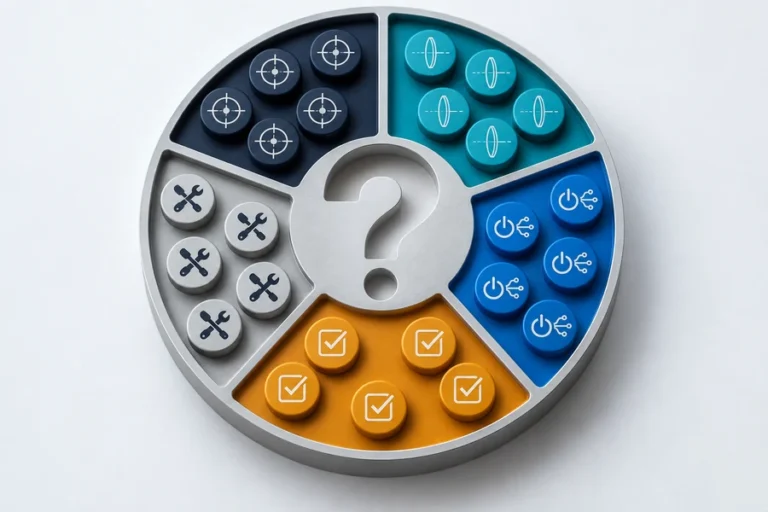
استخدم هذا الموجز المكون من سبعة أجزاء قبل اختيار المستشعر:
- الإخراج: قيمة المسافة، أو عتبة الوجود، أو المستوى، أو الملف الشخصي، أو قرار مشتق آخر.
- الهدف: الحد الأدنى للحجم، والمادة، والتشطيب، والشفافية، والنعومة، والزاوية، والحركة، والتباين المتوقع.
- الهندسة: نطاق المسافة، وعدم اليقين في خط الرؤية، والخلوص الحوافي، والهياكل القريبة، وإمكانية الوصول للتركيب.
- البيئة: درجة الحرارة والتدرجات، وتدفق الهواء، والضوء المحيط، والغبار، والرذاذ، والهطول، والتلوث، والاهتزاز، والتنظيف.
- التوقيت: معدل التحديث، وزمن الاستجابة، وسرعة الهدف، وسلوك بدء التشغيل، والتصفية، والقياسات غير الصالحة المسموح بها.
- التكامل: الإمداد، والتحفيز، والاتصالات، والتشخيص، والغلاف، والنافذة، والمسار الحراري، وملكية المعايرة.
- التحقق: أهداف تمثيلية ومجموعات أسوأ الحالات، مع حدود نجاح/فشل صريحة.
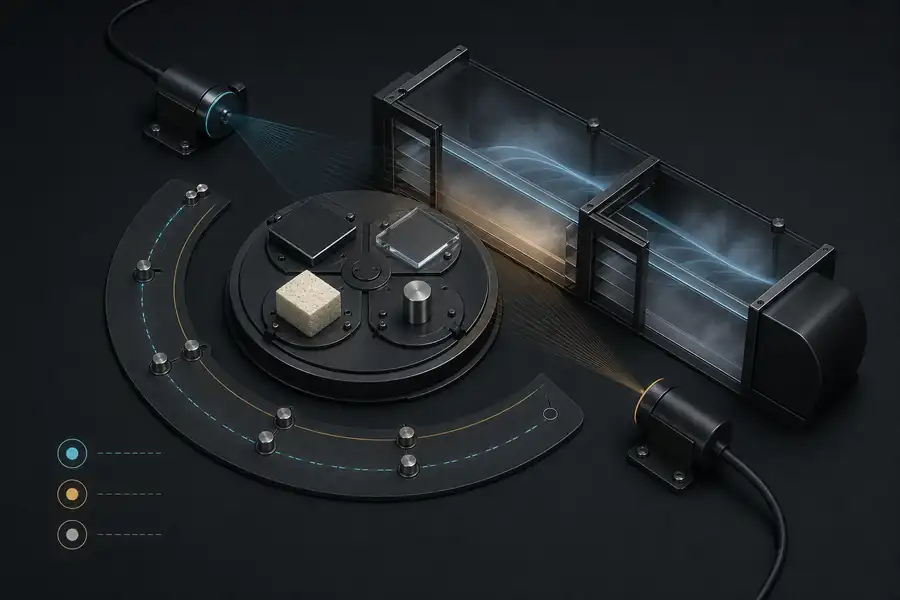
الهدف المحدد الضيق، أو المشهد الغني بالحواف، أو المسافة الطويلة، أو القياس الموضعي السريع غالبًا ما يشير إلى قياس المدى بالليزر. السطح العريض ذو اللون المرئي المتغير أو الإرجاع البصري قد يفضل الموجات فوق الصوتية عندما يتم التحكم في الانعكاس الصوتي والزاوية والمنطقة الميتة وتدفق الهواء. إذا اختلطت الظروف بمجموعتي المخاطر، فإن المقارنة المتحكم بها—أو الاستشعار التكميلي مع معالجة أخطاء محددة—أكثر دفاعًا من الاختيار من جدول عام.
تصمم وتصنع LUMEXIS وحدات قياس المدى بالليزر ومصادر الليزر ذات الصلة. نظرة عامة على وحدة قياس المدى تحدد الحدود النموذجية للوحدة. يمكن لدعم الهندسة والتخصيص مراجعة قيود الهدف والبصرية والميكانيكية والإلكترونية والبرمجيات الثابتة والحرارية والإشارات الضعيفة لتنفيذ قياس المدى بالليزر.
الأسئلة الشائعة
أيهما أكثر دقة: مستشعر المسافة بالليزر أم بالموجات فوق الصوتية؟
لا يوجد فائز عالمي. غالبًا ما يوفر قياس المدى بالليزر بصمة قابلة للتحديد أصغر ويمكن أن يدعم قياسًا موضعيًا دقيقًا. يمكن أن تكون الموجات فوق الصوتية مستقرة على أهداف عريضة عاكسة للصوت ولكنها تتأثر بزاوية الهدف والاستجابة الصوتية ودرجة حرارة الهواء والاضطراب والمنطقة الميتة وتوقيت التحديث. قارن الأجهزة المحددة تحت نفس ظروف الهدف والقبول.
هل يعمل مستشعر الموجات فوق الصوتية على الأجسام الشفافة؟
يمكن ذلك، لأن الشفافية المرئية لا تمنع صدى الصوت. لا يزال الأداء يعتمد على حجم الهدف وسمكه واتجاهه وشكل سطحه وتركيبه. يمكن للأغشية الرقيقة والحاويات المائلة والرغوة والهياكل القريبة أن تغير الصدى، لذا فإن اختبار التطبيق ضروري.
هل يمكن لأجهزة استشعار المسافة بالليزر العمل في الغبار أو الضباب؟
أحيانًا، لكن الأداء يعتمد على كثافة المعيق وطول المسار والطول الموجي والفتحة وتصفية المستقبل ومعالجة الإشارات وإشارة الهدف. يمكن للغبار أو الضباب أن يوهّن ويشتت الضوء، لذا يجب التحقق من المدى ومعدل القراءة الصالحة في ظروف تمثيلية.
لماذا تحتوي أجهزة الاستشعار فوق الصوتية على منطقة عمياء أو ميتة؟
بعد إصدار دفعة صوتية، يستمر المحول في الاهتزاز لفترة وجيزة. لا يمكنه تمييز إرجاع فوري بشكل موثوق حتى يضمحل هذا الرنين وتكون مسار الاستقبال جاهزًا. حد المدى القريب الناتج خاص بالجهاز ويجب التحقق منه في ورقة البيانات والتركيب.
هل يمكن استخدام أجهزة استشعار الليزر والموجات فوق الصوتية معًا؟
نعم، عندما توفر أوضاع فشلها المختلفة فحصًا متقاطعًا أو تغطية مفيدة. لا يزال المضيف بحاجة إلى قواعد للخلاف والبيانات القديمة والقراءات غير الصالحة والتوقيت والتراجع الآمن. لا ينشئ مستشعران تلقائيًا نتيجة موثوقة.
المراجع
- Pepperl+Fuchs،, دليل تقنية أجهزة الاستشعار فوق الصوتية.
- Pepperl+Fuchs،, مستشعر الموجات فوق الصوتية: الأسئلة الشائعة - التأثيرات الخارجية.
- بانر الهندسية،, المستشعرات فوق الصوتية 101.
- ifm،, نظرة عامة على تقنية الموجات فوق الصوتية.
إذا كنت تشارك مجموعة الهدف، ونطاق المسافة، والزاوية، والبيئة، ومعدل التحديث، والواجهة، والغلاف،, اتصل بفريق هندسة لوميكسيس لمراجعة ملاءمة قياس مدى الليزر.