

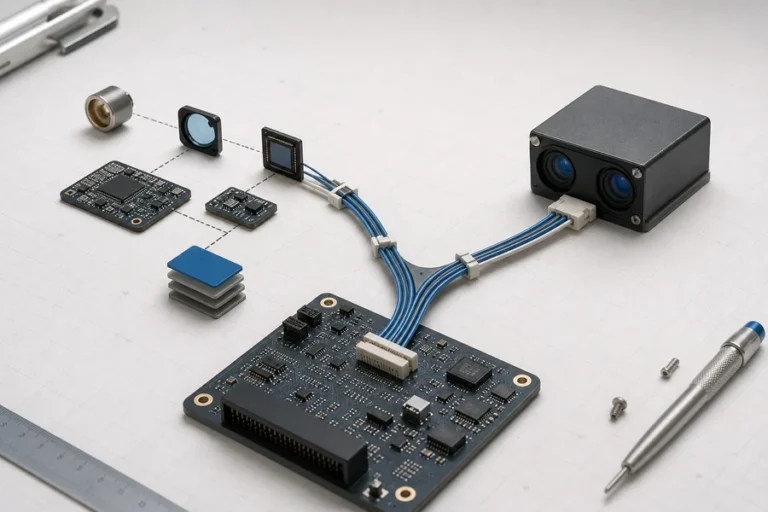

يمكن لمستشعرين بصريين أن يخرجا القياسات بالمليمترات ومع ذلك يحلان مشكلات مختلفة. قد يفشل جهاز مختار من خط دقة معين عندما يميل الهدف، أو تتغير مسافة الوقوف، أو يعبر الارتداد نافذة واقية، أو يتوقع المضيف مسافة أسرع مما يمكن للمستقبل التحقق منه.
يخلق هذا عدم التوافق عمل إعادة تصميم متأخراً في التكامل. السؤال المفيد ليس أي تقنية أفضل بمعزل عن غيرها، بل أي كمية قابلة للقياس تبقى موثوقة داخل هدفك وهندستك وسرعتك وبيئتك.
في قرار مستشعر التثليث مقابل زمن الطيران، اختر التثليث لقياس الإزاحة أو المظهر الجانبي قصير المدى المتحكم فيه عندما يكون التغير الدقيق في الموضع مهماً. اختر ToF عندما يحتاج النظام إلى مسافة وقوف أكبر أو نطاق قياس أوسع. في كلتا الحالتين، تحقق من الهدف الفعلي والزاوية والنافذة والضوء المحيط والسرعة وسلوك الإبلاغ قبل تجميد التصميم.
التثليث مقابل مستشعر زمن الطيران: الفرق الحاسم
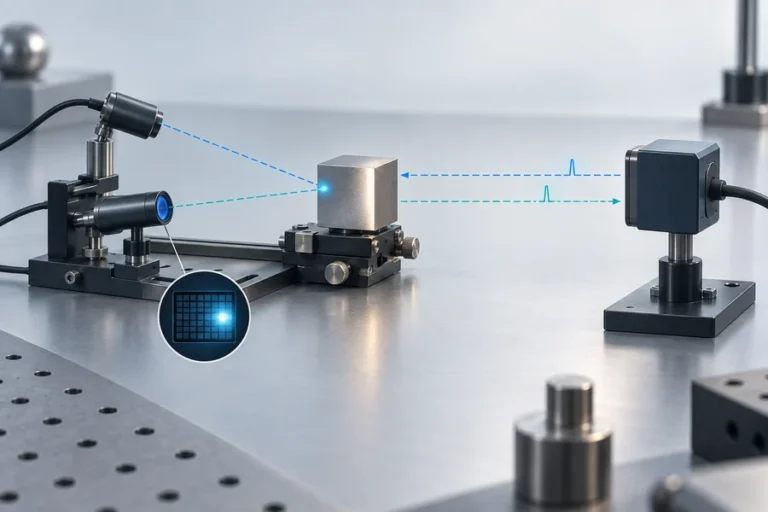
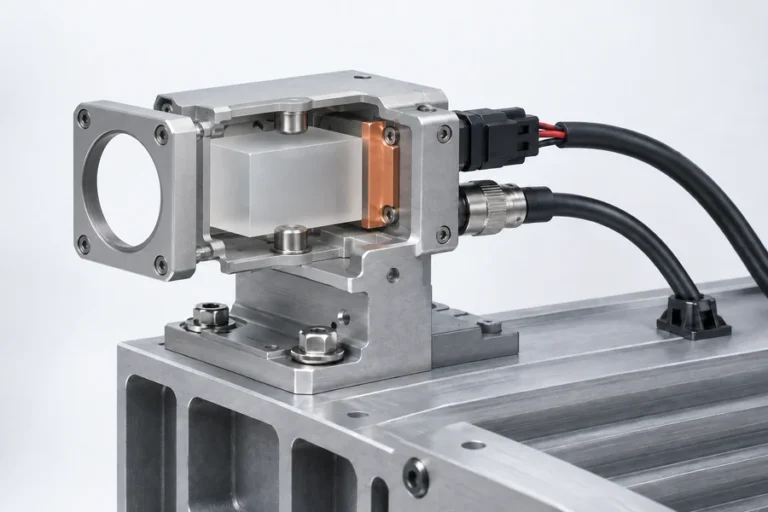
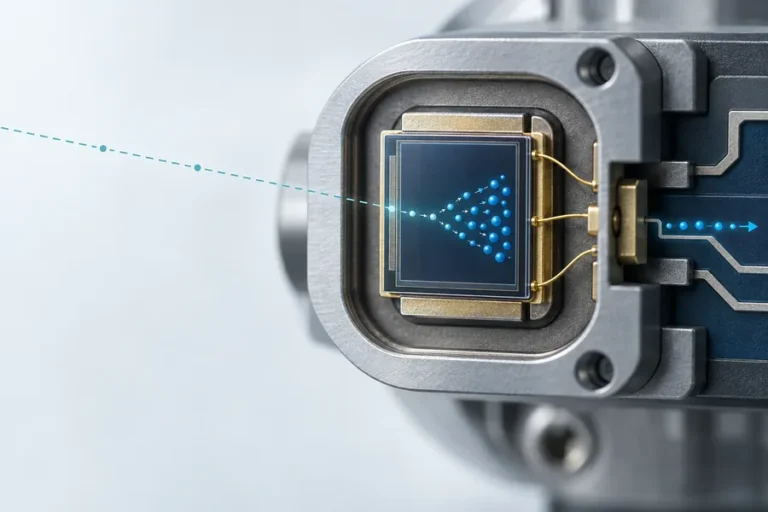
يسقط مستشعر التثليث بالليزر بقعة على الهدف ويعاين البقعة المنعكسة عبر مستقبل مُزاح عن الباعث. مع تحرك الهدف، تتغير زاوية الارتداد، فتستقر البقعة عند موضع مختلف على مستقبل PSD أو CCD أو CMOS. يحوّل المعايرة موضع الصورة هذا إلى مسافة أو إزاحة.
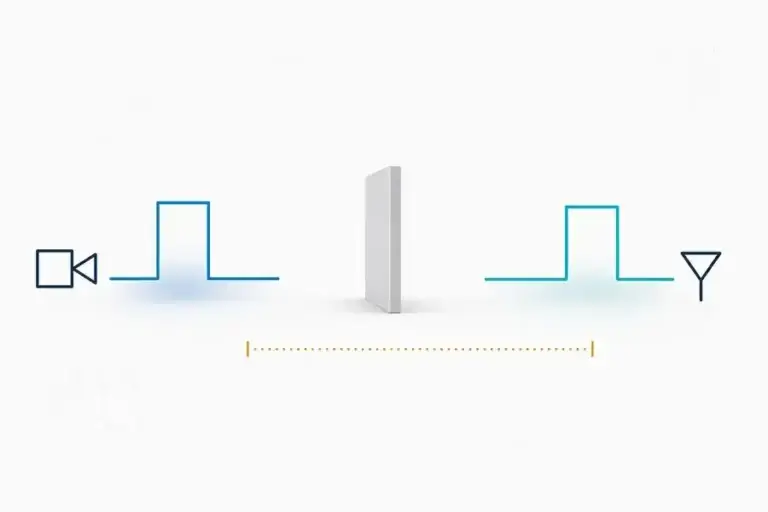
يقيس مستشعر المسافة بزمن الطيران كمية زمنية بدلاً من ذلك. في ToF المباشر، يحدد المستقبل التأخير بين الانبعاث والارتداد؛ والعلاقة الأساسية هي d = cΔt / 2, ، حيث يمثل العامل اثنان المسار الخارجي والعائد. يقدّر ToF غير المباشر المسافة من إزاحة الطور لإشارة مُضمّنة. دليلنا إلى قياس المسافة بزمن الطيران يشرح سلسلة القياس بمدى أكبر من التفصيل.
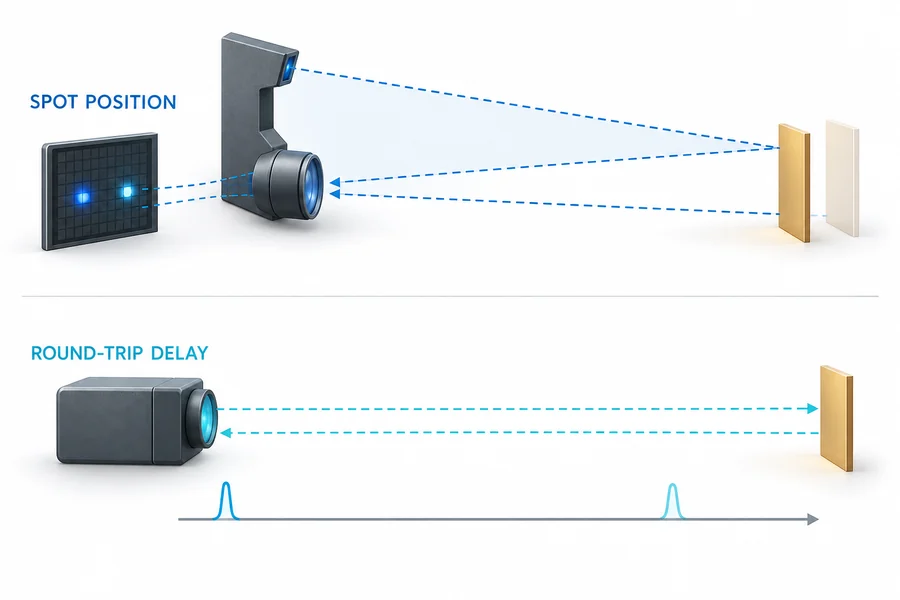
يشكّل هذا التمييز العتاد. يحتاج التثليث إلى خط أساس معروف بين الباعث والمستقبل وتغير زاوي كافٍ عبر نطاق قياسه. يحتاج ToF إلى مُرسل ومستقبل وإلكترونيات توقيت أو طور ومعالجة إشارة قادرة على فصل ارتداد صالح عن الضوضاء والمسارات المنافسة. لا تُعرَّف أي من البنيتين بالليزر وحده.
لا تدمج كل جهاز ToF في فئة واحدة. للتطبيقات المباشرة وغير المباشرة قيود مختلفة في الغموض والتوقيت والتضمين والمعالجة. نقارن تلك البنيات بشكل منفصل في ToF المباشر مقابل ToF غير المباشر.
قارن المواصفات دون خلط مصطلحات القياس
يقول الاختصار المألوف إن التثليث يوفر قياساً أدق قصير المدى بينما يغطي ToF مسافة أكبر. هذه نقطة بداية مفيدة، وليست مواصفة شراء. يمكن لأجهزة ToF المدمجة العمل على مدى قصير، ويمكن بناء أنظمة التثليث لمسافات وقوف مختلفة. تعتمد النتيجة الدقيقة على البصريات والكاشف والمعايرة والهدف والتعرض والمعالجة وطريقة الاختبار.
افصل بين هذه المصطلحات:
- نطاق القياس هو الفترة التي يصرّح فيها المورد بأن المستشعر يمكنه إرجاع بيانات ضمنها تحت ظروف محددة.
- الدقة يقارن النتيجة المُبلَّغ عنها بمرجع قابل للتتبع أو قيمة حقيقية معلنة.
- التكرارية يصف التشتت عند قياس الحالة نفسها بشكل متكرر.
- الدقة هو أصغر تغير مُبلَّغ عنه أو قابل للكشف؛ ولا يثبت الدقة المطلقة.
- زمن الاستجابة أو معدل أخذ العينات يصف متى تصبح البيانات الجديدة متاحة، لكن الترشيح والمتوسطة قد يغيران زمن الاستجابة.
- حجم البقعة ومجال المستقبل يحددان أي جزء من المشهد يمكن أن يؤثر في النتيجة.
| عامل الاختيار | التثليث بالليزر | زمن الطيران |
|---|---|---|
| الكمية المقيسة | موضع بقعة الارتداد على عنصر تصوير | تأخير النبضة أو طور التضمين |
| القوة النموذجية | تغيرات إزاحة أو مظهر جانبي دقيقة في غلاف عمل متحكم فيه | قياس المسافة عبر مسافة وقوف أو غلاف قياس أوسع |
| الاعتماد على الهندسة | يتطلب خط أساس مستقر ورؤية واضحة للباعث/المستقبل | يتطلب تداخل مجال المُرسل/المستقبل ومسار ارتداد قابل للفصل |
| خطر الهدف الشائع | زاوية السطح، الارتداد المرآوي، انتقالات الحواف، الحجب، تغير اللون أو الملمس | ارتداد ضعيف، ضوء خلفية، مسارات متعددة، انعكاسات النوافذ، اعتراض جزئي للحزمة |
| فحص ورقة البيانات | مسافة الوقوف، المدى، الخطية، التكرارية، شكل البقعة، ظروف أخذ العينات | ظروف المدى، تعريف الهدف، قاعدة الارتداد الصالح، وضع التحديث، الغموض والترشيح |
| أفضل مخرج للتحقق | إزاحة خام مع مؤشر الإشارة/الجودة | مسافة خام مع الحالة، هوية الارتداد، الثقة أو رمز غير صالح حيث يتوفر |
عندما تستخدم ورقتا بيانات هدفين أو ترشيحين مختلفين، لا تكون الأرقام قابلة للمقارنة مباشرة. اطلب الهدف والمسافة والزاوية والإضاءة ودرجة الحرارة والتعرض أو المتوسطة وحالة العينة ومعيار النجاح وراء كل قيمة. ثم أعد إنتاج الظروف ذات الصلة باستخدام اختبار اختبار مدى محدد المدى بالليزر.
الهندسة وسلوك الهدف يحددان أي مستشعر ينجو من التكامل
يستمد التثليث حساسيته من الهندسة. يجعل خط الأساس وزاوية المستقبل حركة الهدف مرئية كحركة بقعة على المصفوفة، لكنهما أيضاً ينشئان مجال رؤية اتجاهياً. يمكن لدرجة أو تجويف أو حافة أمامية أن تضيء نقطة لا يستطيع المستقبل رؤيتها. يمكن أن يؤدي تدوير الهدف إلى إرسال معظم الطاقة المرآوية بعيداً عن عدسة الاستقبال أو تحريك بقعة مستطيلة عبر الكاشف.
غالباً ما يُرتَّب ToF بفصل أصغر بين محوري الإرسال والاستقبال، لكنه ليس محصناً ضد الهندسة. قد يُرجع هدف صغير أو مائل طاقة قليلة جداً. يمكن أن تختلط حافة أمامية بالهدف المقصود. يمكن لسطح حاوية قريب أو نافذة واقية أن يخلق مساراً مبكراً ينافس الارتداد المطلوب. يستهلك ضوء الخلفية هامش المستقبل حتى مع أن المسافة تُحسب من التوقيت وليس من السطوع وحده.
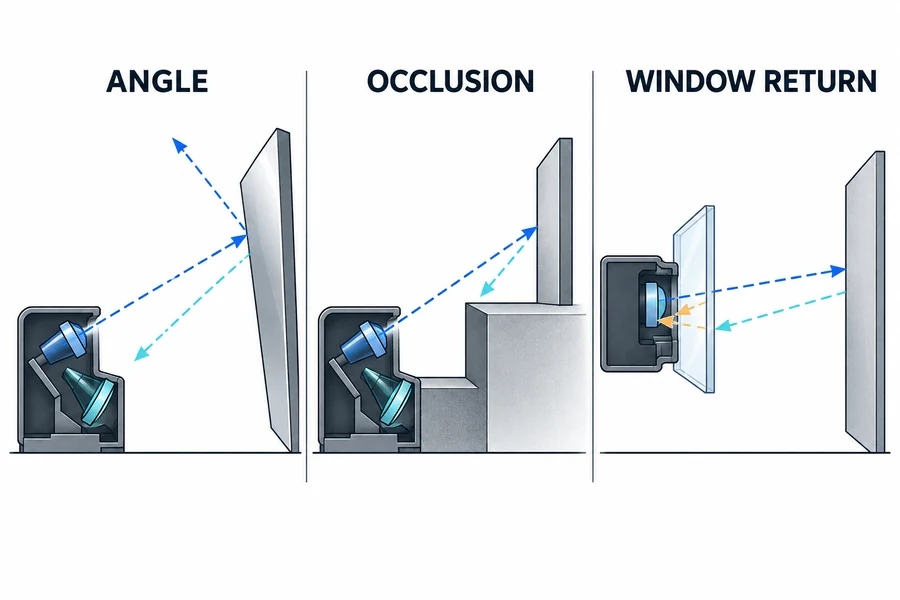
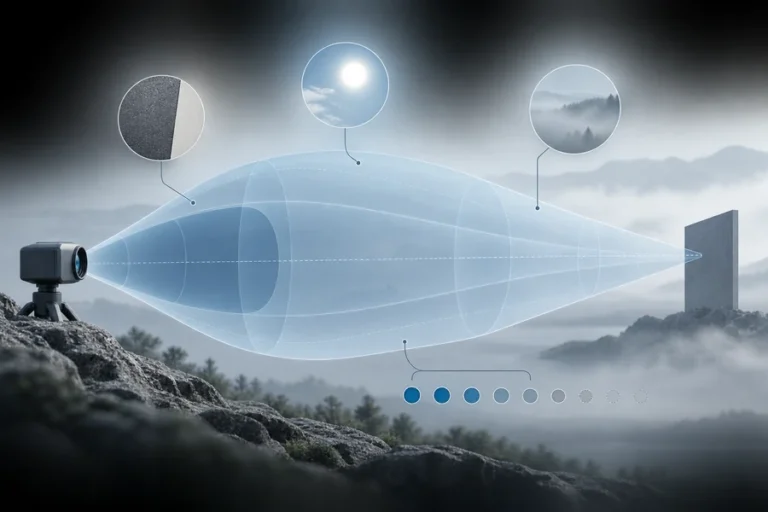
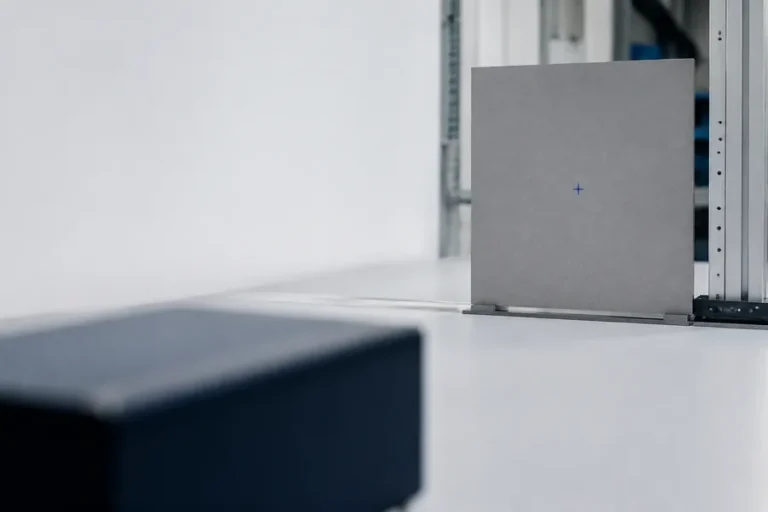
تعامل مع الهدف كحدود بصرية، وليس مجرد اسم لون. سجّل المادة والتشطيب والحجم والانحناء والزاوية والحركة والمسافة والخلفية والتلوث ودرجة الحرارة المتوقعة. دليلنا target reflectivity guide explains why visible appearance is not a complete description of the return.
The host window deserves its own review. For triangulation, it must preserve both the projected path and the offset receiver view over the full working span. For ToF, it must control near-field reflections and keep the transmit and receive paths from coupling inside the enclosure. In both cases, verify the installed window, coating, angle, clear aperture, cleanliness, and tolerance stack.
Use the application to choose the architecture
Favor triangulation when the engineering question is a small position change inside a controlled working envelope: height, thickness, runout, edge position, step, or a scanned surface profile. It is especially useful when the sensor can be mounted rigidly, the target presentation is repeatable, and the receiver has an unobstructed view.
Favor ToF when the question is absolute distance across a larger or changing standoff: ranging to civil structures, position on a long machine axis, level or clearance measurement, or integration into a compact instrument. A laser rangefinder module can combine the transmitter, receiver, timing, processing, and host interface, but the finished system still owns the mount, window, target conditions, software, and acceptance test. The current Lumexis laser rangefinder module family provides the model-specific starting point.
An overlap zone does not mean either method will work equally well. In a triangulation vs time of flight sensor shortlist, let the target and installation break the tie when the required distance and precision fall inside both product families. A stable diffuse surface at fixed standoff may favor triangulation. A changing standoff, tight packaging around the optical axes, or a broader ranging task may favor ToF. Transparent, highly specular, very dark, or mixed-depth targets require application-specific testing for either method.
Validate the choice with a controlled comparison
Begin with one reference target and one traceable distance or displacement setup. Freeze the sensor configuration, supply, warm-up state, mount, window, target size, angle, background, ambient light, filter settings, and host logging. Define acceptable error, repeatability, invalid-return rate, latency, and recovery behavior before collecting data.
Then change one factor at a time. A useful sequence is distance, target material, target angle, edge position, motion, ambient light, window condition, temperature, and supply variation. Preserve raw values and quality or status fields; a filtered distance alone can hide dropouts, mode changes, and outliers.
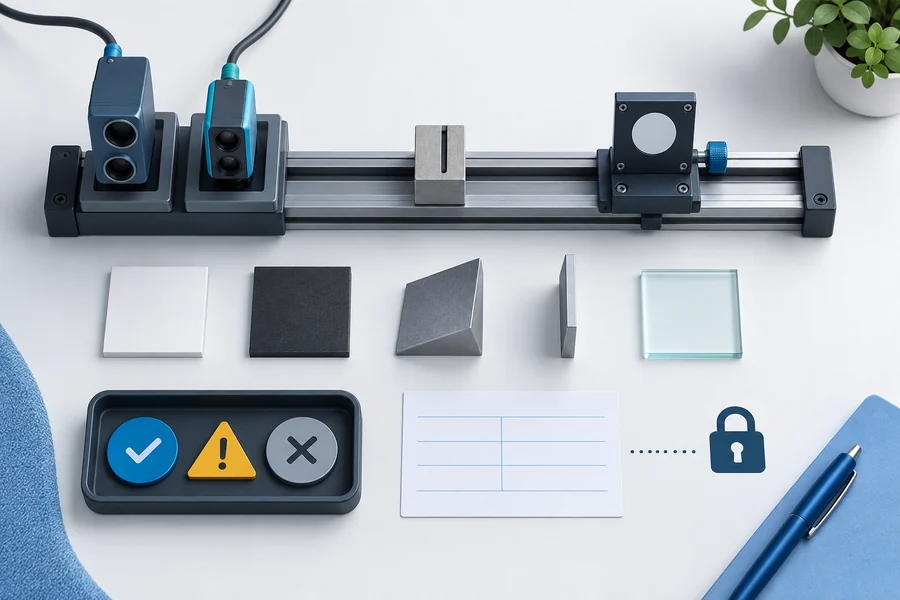
Finally, repeat the important cases in the host enclosure with final mechanics, power, cabling, and software. The supplier’s component test and the OEM’s installed-system acceptance answer different questions. LUMEXIS صفحات الخدمات الهندسية can support model selection, optical and mechanical integration, interface review, validation planning, and troubleshooting across pre-sales and after-sales stages.
Our Wuxi engineering and commercial office works with a 14,000-square-meter Taizhou manufacturing base. Cleanroom assembly, controlled optical alignment, hermetic packaging where applicable, aging or burn-in screening, temperature cycling, and final performance testing help convert a validated configuration into repeatable production. These capabilities support the evidence chain; they do not replace validation in your completed instrument.
الأسئلة الشائعة
Is ToF always less accurate than triangulation?
No. The architecture suggests typical strengths, but the result belongs to a specific device, range, target, configuration, and test method. A high-quality ToF sensor can outperform an unsuitable triangulation setup in its intended task. Compare accuracy and repeatability under matched conditions rather than using the family name as the pass criterion.
Can triangulation measure a dark or glossy target?
Sometimes, if enough usable return reaches the imaging element and the sensor can control exposure or gain without corrupting the spot estimate. Dark, glossy, textured, transparent, or strongly angled surfaces can change spot shape and intensity. Test the actual material across the required angle and distance envelope.
Does ToF ignore target reflectivity?
No. Timing determines distance, but the receiver still needs a return with adequate signal quality. Reflectivity, target size, angle, beam footprint, background light, atmosphere, receiver aperture, and processing all affect whether the correct return can be detected and qualified.
Which method handles angled surfaces better?
There is no universal winner. Triangulation is explicitly sensitive to the return angle and receiver view, while ToF still depends on enough energy returning within the receiver field. Compare the actual incidence angles, surface finish, spot size, target size, and mounting constraints in a controlled test.
Can both methods work through a protective window?
Yes, but the window becomes part of the optical system. Verify wavelength transmission, coating, wedge or tilt, thickness, clear aperture, contamination, and internal reflections. Triangulation must preserve its offset geometry; ToF must prevent near-field leakage or multipath from masking the desired return.
المراجع
- OMRON, Displacement Sensor Technical Guide, especially the laser-triangulation principle and receiver-element discussion.
- ams OSRAM, Time-of-Flight Measurement Using Pulse Lasers, Application Note AN106.
- STMicroelectronics،, Time-of-Flight Principles, Challenges, and Performance.
- KEYENCE, Position Recognition Type Laser Sensor Principles.
Choosing a measurement method for an OEM design? أرسل إلى مهندسي التطبيقات لدينا the distance envelope, required accuracy and repeatability, target materials and angles, measurement rate, optical window, ambient conditions, interface, annual volume, and fixed mechanical constraints. We can recommend a standard laser rangefinder module or review a custom or private-label requirement with its own qualification scope and lead time.